You finally turn your head without wincing, get back to training, or make it through a workday without that familiar ache at the base of your neck. Then a few weeks later, it is back. If you are asking, why does neck pain return, the answer is usually bigger than sleeping in an awkward position or needing one more treatment.
Recurring neck pain often means the original flare-up settled, but the factors that made your neck sensitive in the first place did not change enough. That does not mean you are broken or that your spine is out of place. It means your body may not yet have the mobility, strength, recovery, or workload tolerance needed for the demands you are asking of it.
For desk workers, lifters, runners, parents, and athletes, the goal is not to avoid every episode of neck stiffness forever. It is to understand the pattern, build capacity, and make flare-ups less frequent, less intense, and easier to manage.
Why does neck pain return after treatment?
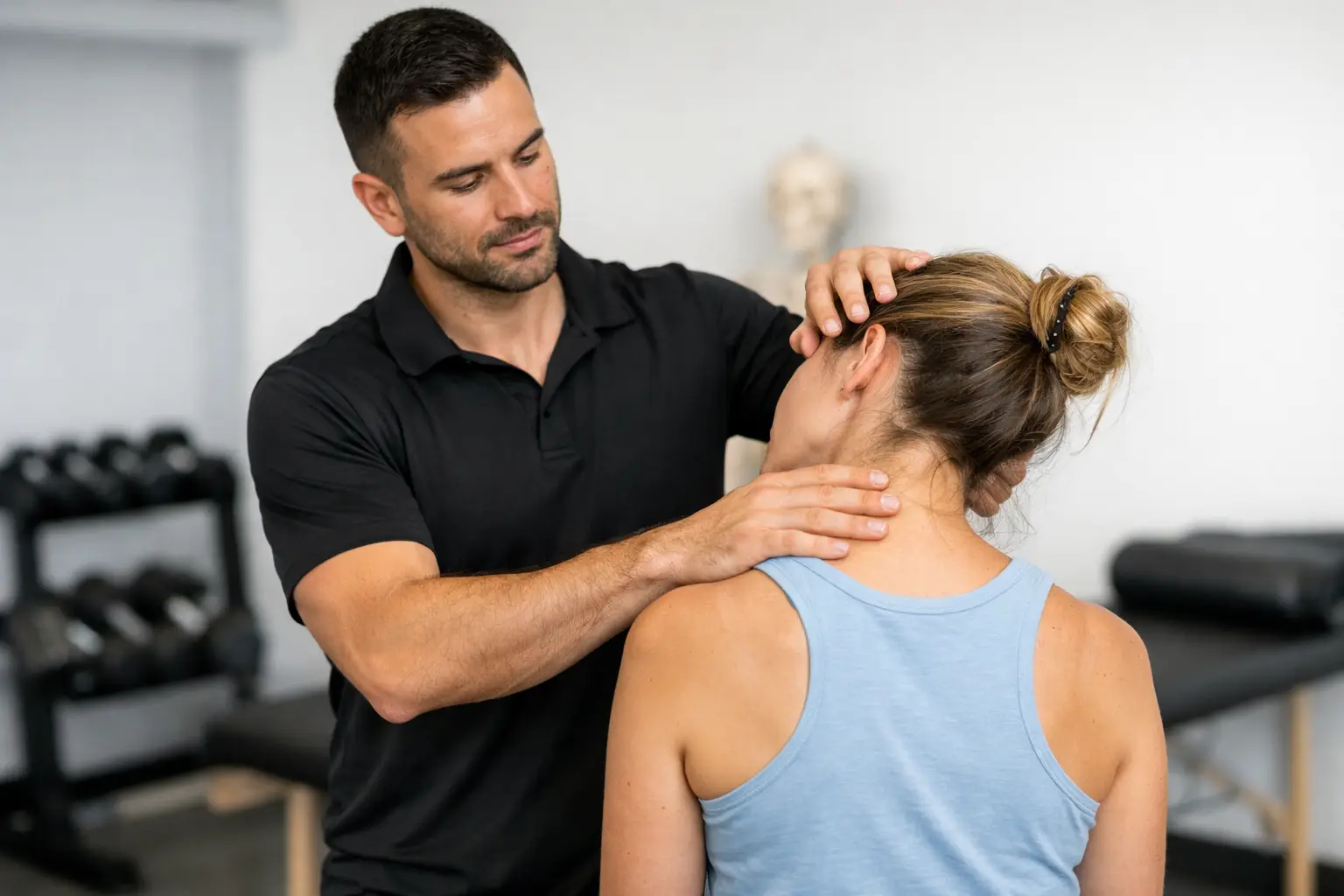
Hands-on treatment can be useful. Chiropractic care, massage therapy, joint mobilization, soft tissue work, cupping, Class IV laser therapy, or other approaches may help reduce pain and improve movement in the short term. That relief matters, especially when pain is limiting sleep, work, training, or daily life.
But feeling better is not always the same as being ready for the same workload that triggered the issue. If symptoms calm down and you immediately return to long computer days, heavy overhead lifting, high-volume training, stressful weeks, or poor sleep without rebuilding tolerance, the neck can become irritated again.
This is not a failure of the treatment or the person. It is a gap between symptom relief and rehabilitation. Passive treatment can create a valuable window to move better. The next step is using that window to address what is contributing to the problem.
The most common reasons neck pain keeps coming back
Your workload changed faster than your capacity
Neck pain often returns after a sudden increase in demand. Maybe you went from little training to four gym sessions per week, added more overhead pressing, started a new job with longer screen time, or spent a weekend doing yard work after a quiet winter.
The activity itself is not necessarily the problem. Your neck, upper back, shoulders, and surrounding muscles simply may not have been prepared for that amount of work yet. Even a movement that is normally healthy can become irritating when volume, intensity, frequency, or recovery changes too quickly.
This is why someone can tolerate a light workout but flare up after heavy carries, high-rep pull-ups, long bike rides, or hours at a laptop. The issue is often dosage, not a single “bad” exercise.
You addressed pain but not the movement pattern
When your neck hurts, your body often finds ways around it. You may hold your shoulders up, avoid turning one direction, brace through your jaw, or move more from the lower back than the upper back. These strategies can be useful temporarily, but they are not ideal long-term.
If the pattern remains after pain settles, the same tissues may keep taking on more work than they can handle. Limited upper-back movement, reduced shoulder control, or poor tolerance to rotation can all contribute, depending on the person and their activity.
That is why a detailed assessment matters. A clinician should look beyond the painful spot and consider how you move through your neck, upper back, shoulders, ribs, and the specific activities that aggravate symptoms.
Your neck is doing work other areas should share
The neck does not work alone. During a press, pull-up, golf swing, run, or long day at a desk, it interacts with the upper back, shoulder blades, rib cage, breathing mechanics, and trunk.
For example, if your shoulders lack strength or control during pressing, your upper traps and neck may take over. If you spend long periods in one position and rarely change it, the issue may be less about “bad posture” and more about low movement variety and poor endurance. If your upper back is stiff, your neck may be asked to create motion that should be shared elsewhere.
There is no single perfect posture that prevents pain. The better target is movement options, strength, and the ability to tolerate the positions your day requires.
You stopped rehab when symptoms improved
This is one of the most understandable reasons for recurring pain. Once you can sleep, work, and train again, rehab can feel unnecessary. But early symptom improvement is often just the beginning of recovery.
Mobility drills may help restore comfortable motion, but mobility alone rarely prepares someone for a full return to heavy lifting, recreational sport, or physically demanding work. The body also needs progressive loading. That may include neck endurance work, upper-back strength, shoulder and scapular control, carries, rowing variations, pressing progressions, or sport-specific drills.
The right plan depends on your presentation. A runner with neck tension during long runs needs a different progression than a CrossFit athlete who flares up during overhead work or a professional who develops headaches after long meetings.
Stress, sleep, and recovery are lowering your threshold
Neck pain is physical, but it is not purely mechanical. Poor sleep, high stress, long work hours, low activity, and limited recovery can make the nervous system more sensitive and reduce how much load you tolerate before symptoms appear.
That does not mean the pain is “all in your head.” It means pain is influenced by the whole person. You can have strong shoulders and good mobility but still flare up more easily during a week of poor sleep, deadline pressure, travel, and reduced training consistency.
A good rehab plan accounts for real life. Sometimes the best next move is not adding more exercises. It may be temporarily adjusting training volume, breaking up screen time, changing how you carry a bag, or building a simpler routine you can actually maintain.
What helps break the recurring neck pain cycle
The first step is identifying your pattern. When does neck pain return? Is it after deadlifts, overhead lifting, driving, desk work, a certain sleep position, stress, or an increase in training volume? Specific patterns give useful clues and help move beyond generic advice.
From there, treatment should have a purpose. Hands-on chiropractic care, soft tissue therapy, massage, mobilizations, adjustments when appropriate, shockwave therapy, or Class IV laser therapy may be used to help settle symptoms and improve your ability to move. They are tools, not the entire plan.
The lasting work is usually active. It involves restoring comfortable motion where needed, improving control, progressively strengthening the tissues involved, and gradually reintroducing the activities you care about. That could mean building tolerance for a full workday, returning to barbell training, improving your overhead position, or getting through a round of golf without guarding your neck by the back nine.
At Ground Up Chiropractic and Rehab in Hamilton, that process can include movement assessment, hands-on care, and gym-based rehab in the same plan. Instead of asking only, “Where does it hurt?”, the focus is also on what your neck needs to tolerate next.
Do not wait for a major flare-up to adjust the plan
A mild return of stiffness does not always mean you need to stop everything. Often, it is useful feedback that your current workload is a little ahead of your capacity. Pulling back temporarily, modifying the aggravating movement, and continuing with an appropriate progression can be more productive than complete rest.
That said, neck pain after significant trauma, or pain accompanied by severe or worsening headache, dizziness, fainting, weakness, numbness, changes in coordination, fever, unexplained weight loss, or other concerning symptoms should be assessed promptly by an appropriate healthcare professional.
For most recurring cases, the better question is not, “What can make this disappear today?” It is, “What do I need to improve so this activity stops exceeding my current capacity?” An assessment can help answer that question and give you a practical path back to work, training, sport, and everyday movement with more confidence.
