Your back may feel fine during a short walk but tighten up when you deadlift. Your knee may tolerate day-to-day life but flare after a run. That gap is exactly where strength training in physiotherapy matters. Feeling better is a useful starting point, but your body also needs the capacity to handle the activities you want to get back to.
For active adults, rehab should not end when pain settles down. It should build a clear path from irritated and uncertain to capable, confident, and ready for real life. That may mean returning to the gym, keeping up with your kids, working a physical job, running 10 kilometres, or simply getting through a long day at a desk without worrying about the next flare-up.
Why strength is part of recovery
Pain can change how you move. You may avoid loading one leg, brace through a squat, stop reaching overhead, or reduce how much you train. Sometimes that is a reasonable short-term response. The problem is that prolonged avoidance can reduce strength, coordination, and confidence in the very movements you need.
Strength-based rehab gives you a way to gradually reintroduce those demands. It is not about pushing through sharp pain or proving how tough you are. It is about finding a starting point your body can tolerate, then progressing it with purpose.
A good physiotherapy plan looks beyond the painful area. A runner with knee pain may benefit from improving calf, hip, and single-leg capacity. Someone with shoulder pain may need to rebuild pressing tolerance, pulling strength, and control through overhead positions. A desk worker with recurring back pain may need more than stretches - they may need to improve how confidently they hinge, carry, squat, and move under normal daily load.
This is why rest alone often feels incomplete. Rest can calm symptoms, but it does not automatically prepare you for the load that caused the issue, or the load you want to return to.
Strength training in physiotherapy is not random exercise
There is a major difference between being handed a generic exercise sheet and following a progressive strength plan built around your specific limitations and goals. The right exercise is not necessarily the most complicated one. It is the one that matches where you are now and moves you toward what you need to do next.
Early in rehab, that might be an isometric hold, a supported split squat, a controlled row, or a light hip hinge. As tolerance improves, the plan can progress through more range of motion, more load, more repetitions, faster movement, less support, or more sport-specific demands.
For example, a person rebuilding after an ankle injury may start with controlled calf raises and balance work. Later, they may progress to loaded single-leg raises, hopping, deceleration, and change-of-direction drills. Stopping at band exercises may help someone feel safer, but it may not be enough preparation for basketball, trail running, or a demanding job on their feet.
The progression depends on the person. A recreational lifter wanting to return to barbell squats needs a different target than someone whose main goal is getting up and down stairs comfortably. Both deserve a plan that respects their starting point and their actual life.
Load is not the enemy
Many people arrive at rehab worried that lifting will make their injury worse. That concern makes sense, especially after a painful flare-up. But load is not automatically harmful. Too much, too soon, too often, or with too little recovery can be a problem. The right amount of load, introduced gradually, is often how tissues and movement confidence improve.
This is where clinical judgement matters. A physiotherapist assesses your symptoms, movement options, training history, activity demands, and response to exercise. They can help you distinguish between expected effort or mild, manageable discomfort and a response that suggests the plan needs adjusting.
Pain is one piece of information, not the only measure of progress. Better range of motion, improved control, higher exercise tolerance, less fear around movement, and the ability to recover well between sessions all matter.
What a strength-based rehab plan should include
A strong plan starts with a detailed assessment, not assumptions. The goal is to understand what aggravates symptoms, what movements are limited, what you can already do, and what you need to return to. Your past injuries, training routine, work setup, sleep, stress, and schedule can all influence what is realistic and useful.
From there, treatment may combine hands-on care with active rehabilitation. Chiropractic treatment, joint mobilization or adjustments when appropriate, soft tissue therapy, massage therapy, cupping, shockwave therapy, and Class IV laser therapy may help reduce symptoms or improve short-term movement tolerance for some people. They are tools, not the whole plan.
The active component is what helps turn that window of relief into meaningful capacity. You should understand why you are doing each exercise, how it relates to your goal, and what progression looks like. If your goal is to return to lifting, eventually your rehab should resemble lifting. If your goal is to run, you will eventually need running-related strength and impact tolerance.
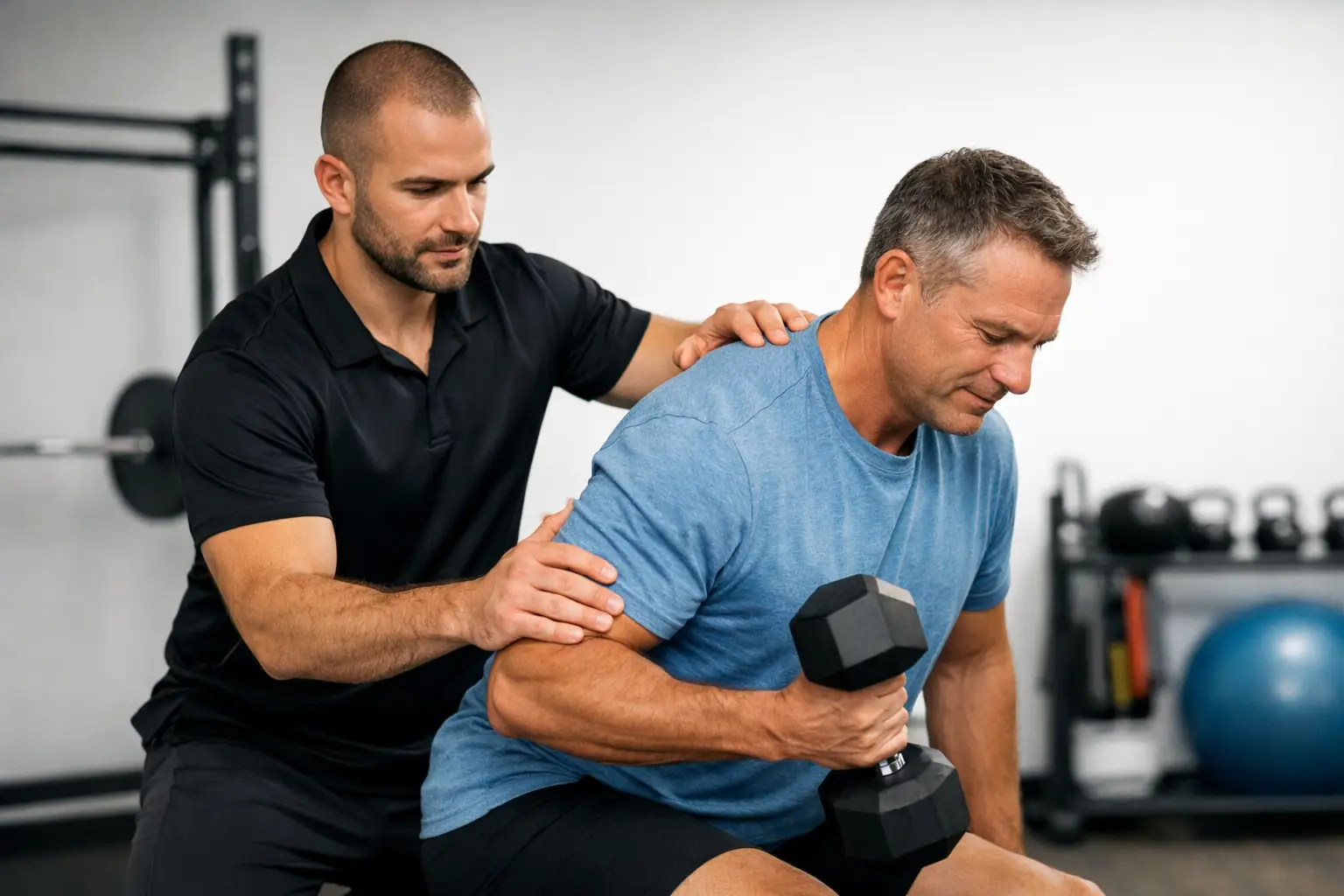
At Ground Up Chiropractic and Rehab, that process can take place in a dedicated gym environment rather than being limited to a treatment table. This makes it easier to bridge the gap between early rehab exercises and the demands of training, sport, work, and everyday life.
The right dose depends on the goal
There is no universal rule for how heavy you should lift in rehab. Some conditions respond well to low-load, high-control work at first. Others benefit from building heavier strength over time. A tendon issue, for example, may require a different loading strategy than a recent muscle strain or a shoulder that is sensitive in overhead positions.
Frequency matters too. Two well-planned sessions per week may be more useful than doing a long list of exercises every day without enough recovery. Your plan should fit your current capacity and your real schedule. Busy professionals, parents, shift workers, and athletes in-season all need different approaches.
The best plan is not the perfect plan on paper. It is the plan you can perform consistently, progress safely, and adapt when life gets busy.
Common mistakes that stall progress
One common mistake is waiting until all pain is gone before rebuilding strength. For many people, that creates a cycle of rest, temporary improvement, return to activity, and another flare-up. Another is jumping back to previous training numbers because daily pain has improved. Symptoms can settle before your body is prepared for a full return to volume, intensity, or speed.
It is also easy to chase too many passive treatments without enough active follow-through. Hands-on care can be valuable, especially when pain or stiffness is limiting your ability to move. But if the goal is a more resilient return to activity, exercise progression needs a central role.
Finally, do not judge an exercise solely by whether it feels easy. A basic-looking movement can be highly effective when the load, tempo, range, and progression are right. Rehab does not need to look impressive. It needs to move you forward.
From rehab to performance
The final stage of physiotherapy should not feel like being discharged with fingers crossed. It should include a return-to-performance plan that prepares you for the tasks that matter most. For a golfer, that may mean rotational strength and repeated swings. For a CrossFit athlete, it may mean gradually rebuilding squat, pull-up, and Olympic lifting exposure. For someone with a physical job, it may involve lifting, carrying, climbing, pushing, and working through fatigue.
This does not mean every person needs to train like an athlete. It means rehab should match the demands of your life. Strength is useful because life is physical, whether you call it exercise or not.
If you have been stuck between feeling better and truly trusting your body again, an assessment can help clarify the next step. The goal is not to avoid movement forever. It is to build enough capacity that movement becomes something you can rely on again.
