A lot of people start rehab with the same frustrating pattern - rest a bit, get some treatment, feel slightly better, then flare up again as soon as training, work, or daily life ramps back up. That is exactly where a strength based rehabilitation program makes a difference. Instead of chasing symptoms only, it helps you rebuild the physical capacity that your body needs to handle real life again.
For active adults, that matters. If you lift, run, sit at a desk all day, play sports on weekends, or just want to keep up with work and family without pain constantly calling the shots, temporary relief is not enough. You need a plan that improves movement, builds strength, and gives you a clear path back to the activities you care about.
What a strength based rehabilitation program actually means
A strength based rehabilitation program is a rehab plan built around progressive loading. In plain language, that means you do the right exercises, at the right intensity, at the right stage of recovery, so your body gradually becomes more tolerant to stress.
That does not mean every injury needs barbell squats on day one. It means rehab is aimed at restoring capacity, not just reducing pain. For one person, that may begin with bodyweight sit-to-stands, controlled carries, or isometric work. For another, it may progress toward deadlifts, split squats, plyometrics, or return-to-sport drills.
The key idea is simple: pain often improves when the body is better prepared for the demands placed on it. If your shoulder needs to tolerate pressing, your low back needs to handle lifting, or your knee needs to absorb force during running, rehab should eventually train those qualities instead of avoiding them forever.
Why passive treatment alone often falls short
Hands-on care can absolutely be useful. Chiropractic treatment, soft tissue therapy, massage therapy, joint mobilization, adjustments when appropriate, shockwave therapy, Class IV laser therapy, and cupping can all help reduce pain, calm irritation, and improve short-term tolerance to movement.
But if treatment stops there, many people get stuck. Symptoms settle down, but the underlying movement limitations, strength deficits, poor loading tolerance, or return-to-activity plan never really get addressed. That is why someone can feel great after a session and still have the same issue return when they get back to the gym, back to running, or back to a busy work week.
A better model combines symptom relief with a progression. That is where rehab-focused chiropractic care, physiotherapy, massage therapy, and structured exercise-based care work well together. Hands-on treatment can create an opening. Strength-based rehab helps you keep it.
What a good strength based rehabilitation program should include
The starting point should never be a generic sheet of exercises. A strong rehab plan begins with a detailed assessment of symptoms, movement quality, strength, mobility, training history, work demands, and goals.
From there, the program should match the person in front of you. A desk worker with recurring neck pain and upper back stiffness needs a different progression than a runner with Achilles pain or a lifter dealing with hip irritation. Even when two people have pain in the same area, the right rehab plan may look very different.
Assessment first, exercises second
Good rehab clinicians look at more than where it hurts. They want to know what makes symptoms worse, what improves them, how long the problem has been around, what your normal activity level looks like, and what you are trying to get back to.
That matters because the goal is not to hand out random movements and hope something works. The goal is to find the factors that may be contributing to your pain or limiting your progress, then build a plan that actually makes sense for your body and your routine.
Progressive loading, not random exercise
The best strength based rehabilitation program follows progression. You start at a level your body can tolerate, then build from there. Sometimes that means improving pain-free range of motion first. Sometimes it means restoring basic strength and control. Sometimes it means preparing for speed, impact, or heavy lifting.
The program should also be flexible. If symptoms spike every time load increases, you may need to adjust exercise selection, volume, tempo, or recovery strategies. Progress is rarely perfectly linear, and a smart plan accounts for that.
Return to life, not just return to the treatment table
Real rehab should connect directly to your goals. If you are a golfer, your plan should eventually prepare you for rotational demands. If you are a parent lifting kids and carrying car seats, rehab should reflect that. If you are a gym-goer who wants to squat, hinge, press, and pull confidently again, those patterns should be part of the process.
This is one of the biggest gaps in traditional passive care. Feeling better on the table is helpful, but it is not the same as being ready for real-world demands.
Who benefits most from this kind of rehab?
A strength based rehabilitation program is especially helpful for people who have recurring pain, old injuries that never fully resolved, or symptoms that keep coming back when activity increases. It is also a strong fit for active adults who do not want to stop training every time something gets irritated.
This approach often works well for low back pain, neck pain, shoulder issues, hip pain, knee pain, tendon-related problems, postural strain, gym injuries, running-related issues, and return-to-sport progressions. That said, not every condition starts with the same type or amount of loading. Some cases need a slower ramp-up, and some need medical assessment first, especially if symptoms involve significant trauma, unexplained weakness, numbness, or other red flags.
Why the gym matters in rehab
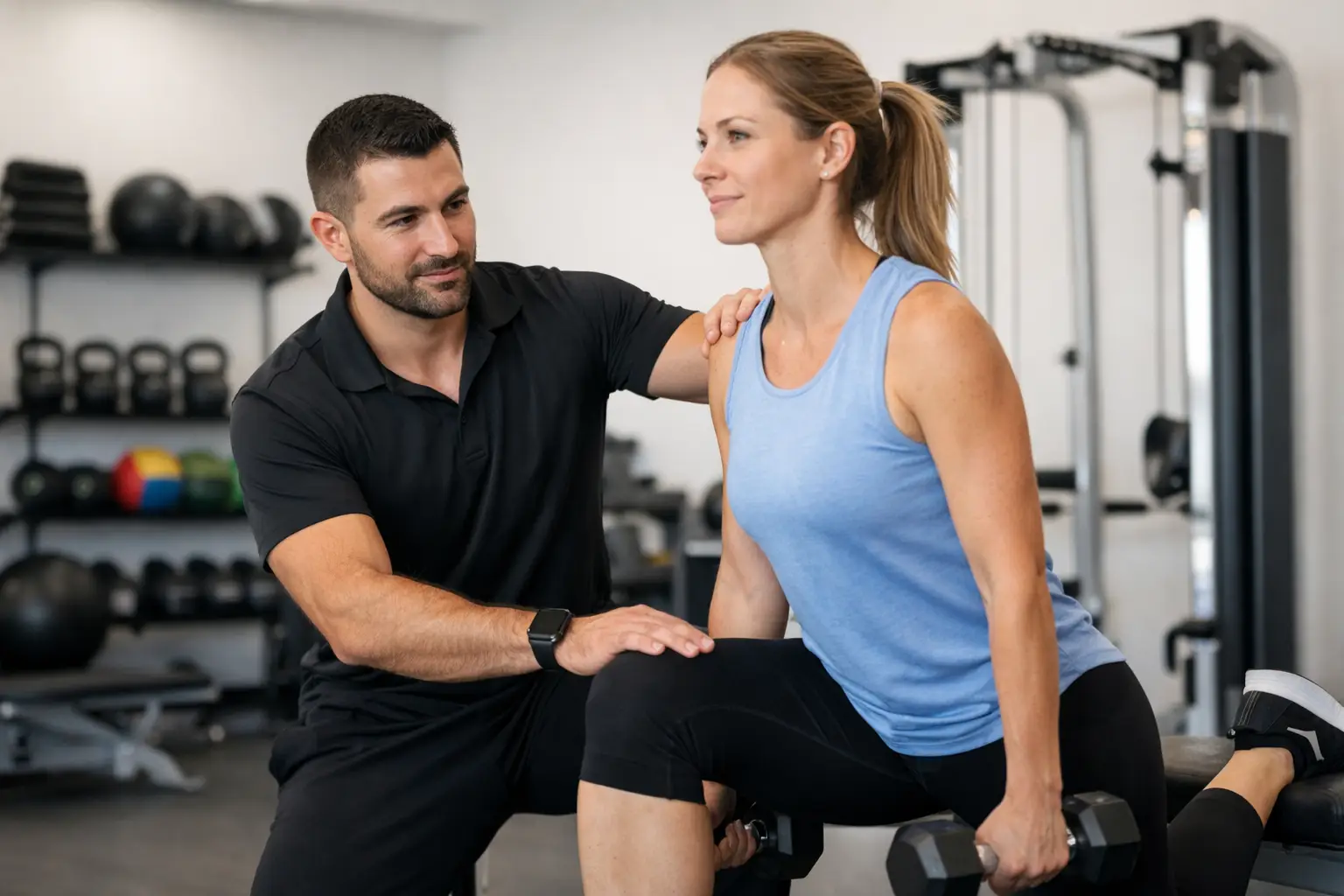
One of the biggest advantages of modern rehab is having access to a dedicated space where exercise progressions can actually happen. There is a major difference between being told to do clamshells forever and being coached through a structured return to strength.
Gym-based rehab allows clinicians to bridge the gap between treatment and performance. That does not mean every patient needs athlete-level programming. It means rehab can move beyond the basics when the time is right.
For many people, this is the missing piece. They have had adjustments, massage, rest, stretching, or a few band exercises, but they have never been shown how to safely rebuild load tolerance. Once that happens, confidence usually improves with capacity.
How hands-on care fits into a strength based rehab plan
Some people hear "strength-based" and assume treatment no longer matters. That is not the case. The best rehab plans are not exercise-only or treatment-only. They use the right tool at the right time.
If pain is high and movement is limited, hands-on care may help settle things down enough to start loading. Chiropractic treatment may help improve mobility in certain cases. Soft tissue therapy, massage therapy, or cupping may reduce tone and sensitivity. Shockwave therapy or Class IV laser therapy may be useful in some presentations as part of a broader plan.
The difference is that these tools are not the whole plan. They support the rehab process instead of replacing it.
What to expect from a strength based rehabilitation program
At a clinic built around movement and performance, your plan should feel structured, not vague. You should understand what you are working on, why it matters, and what progression looks like.
That may include a mix of in-clinic treatment, mobility work, strength exercises, modified training, and gym-based progressions. You should also expect some honest conversations. Sometimes the issue is not that you are damaged. It is that your body currently does not have the capacity for what you are asking it to do. The good news is that capacity can often be trained.
At Ground Up Chiropractic and Rehab in Hamilton, that is the focus. Not endless appointments for temporary relief, but a process that combines assessment, chiropractic care, physiotherapy, massage therapy, hands-on treatment, and progressive rehab to help people return to training, work, sport, and daily life with more confidence.
The trade-off people need to understand
A strength based rehabilitation program usually requires more buy-in than passive care alone. You have to participate. You may need to modify activity, follow a progression, and stick with the plan long enough to build meaningful change.
The upside is that this approach is aimed at lasting improvement, not just short-term symptom control. It is not always the fastest route to feeling different in a single session, but it is often the more effective route to feeling capable again.
If your pain keeps coming back every time life gets busy or training gets serious, that pattern is worth paying attention to. A stronger body does not guarantee you will never have pain again, but it often gives you a much better chance of handling stress without constantly breaking down.
If that sounds like the gap in your recovery, the next step is simple: book an assessment and get a clear plan built around your movement, your goals, and what your body actually needs right now. Better rehab is not about doing more treatment. It is about doing the right work, in the right order, for long enough to matter.
