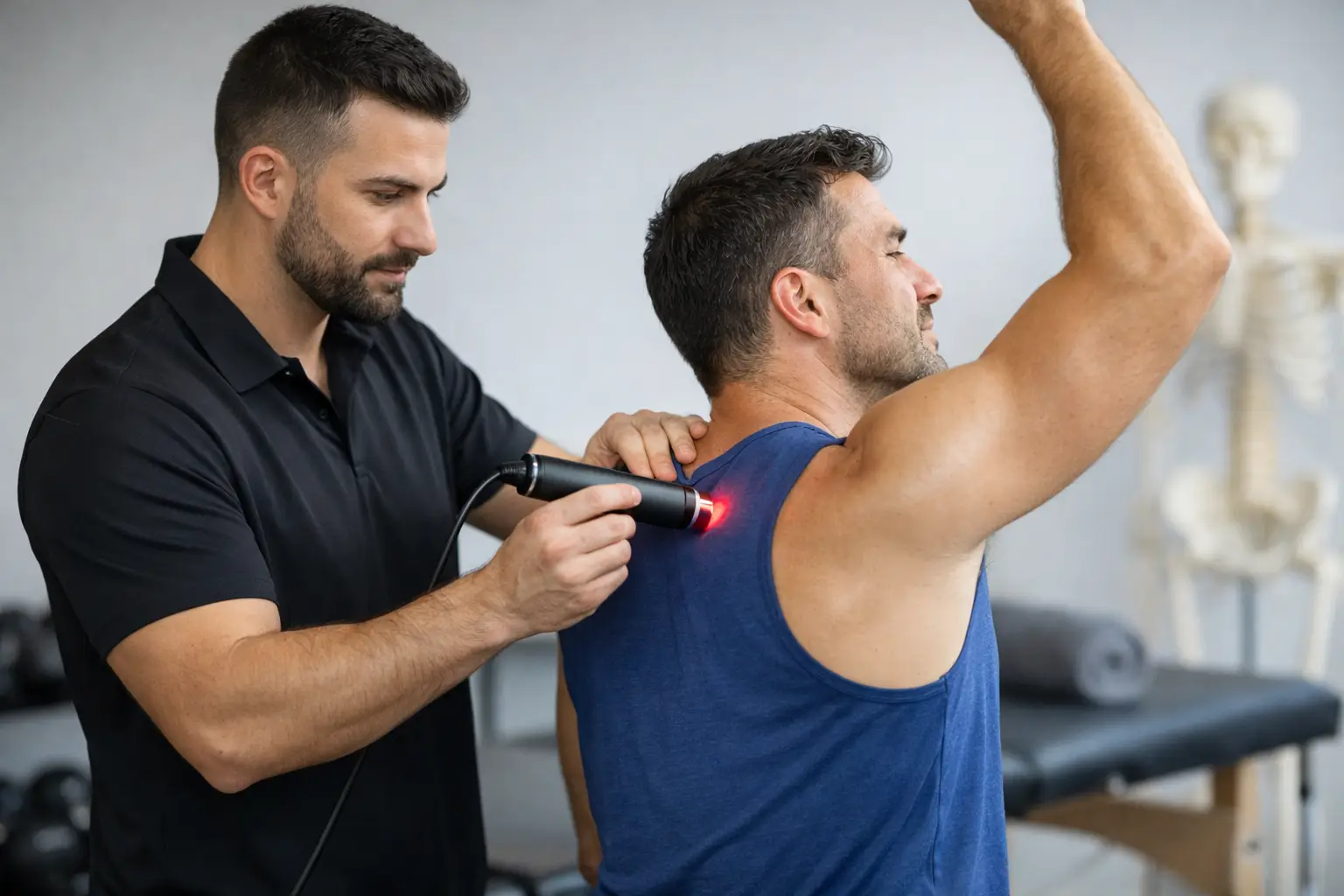
That sharp pinch at the top of a press, the ache that shows up after pull-ups, or the shoulder that feels fine until the bar moves overhead can make training frustrating fast. Shoulder pain from overhead lifting is common, but it does not automatically mean you need to stop training indefinitely or that something is permanently damaged.
The better question is: what is your shoulder currently able to tolerate, and what is making the overhead position harder than it needs to be? For some people, the issue is a recent jump in training volume. For others, it is limited shoulder motion, poor control through the upper back, an irritated tendon, or simply loading a movement they have not built capacity for yet.
A good plan is not about finding one magic exercise or forcing painful reps. It is about reducing irritation, keeping you active where possible, and progressively rebuilding the strength and confidence to lift overhead again.
Why Shoulder Pain From Overhead Lifting Happens
Overhead lifting places the shoulder in a demanding position. Your arm needs enough movement to reach overhead, while your shoulder blade needs to rotate and stay controlled on your rib cage. Your rotator cuff, upper back, trunk, and grip all contribute. When one part of that system is underprepared, your shoulder may start doing more work than it can currently handle.
This does not mean every painful shoulder has the same cause. Pain can come from the rotator cuff, biceps tendon, shoulder joint, AC joint, surrounding muscles, or referred symptoms from the neck. Sometimes there is a clear injury. Often, there is no single moment that caused it. The shoulder simply becomes more sensitive after weeks of extra sets, heavier weights, more CrossFit classes, a new pressing program, poor recovery, or a return to lifting after time away.
Common patterns include pain at the front or side of the shoulder during pressing, a pinch near the top of the range, pain when lowering the weight, or discomfort that lingers after training. The exact symptom matters, but so does your training context. A shoulder that hurts during a heavy barbell press may tolerate a landmine press, dumbbell press, row, carry, or lower-body session very well.
The Mistake: Resting Until It Feels Better, Then Retesting Heavy
Complete rest can be useful for a short period after an acute flare-up, especially if everyday movements are painful. But long periods of avoiding all upper-body loading can leave the shoulder less prepared for the demands you eventually return to.
The familiar cycle is to stop pressing until the pain settles, test the same weight again, flare it up, and repeat. The issue is not a lack of toughness. It is that the gap between “no loading” and “normal training” is too large.
Instead, think in terms of load management. You may need to temporarily reduce range, weight, frequency, speed, or total sets. That is not giving up on overhead lifting. It is creating a version of training your shoulder can tolerate while you build back up.
Pain is not always a perfect damage signal, so it helps to look at the full response. Mild, manageable discomfort during an exercise may be acceptable for some people if it does not escalate rep to rep, change your movement dramatically, or leave the shoulder significantly worse later that day or the next morning. Sharper pain, worsening symptoms, night pain, or a major loss of function deserves a more cautious approach and an assessment.
What to Change in Your Training Right Now
The best modification depends on what provokes your symptoms. If a strict barbell overhead press hurts, switching to a lighter dumbbell press may help because each arm can find a more comfortable path. For others, a half-kneeling landmine press or incline press is a better starting point because it reduces the demand of a fully overhead position.
Grip and range can matter too. A neutral-grip dumbbell press may be more comfortable than a pronated grip. Pressing only through a pain-tolerable range can be a temporary bridge, provided that range is progressed over time rather than avoided forever.
You can also keep training around the problem. Rows, supported pulling variations, carries, lower-body strength work, conditioning, and trunk training may all remain useful. The goal is to preserve as much training momentum as possible without repeatedly irritating the shoulder.
Be careful with the urge to stretch aggressively into the painful position. Some people need more mobility, particularly through the upper back or shoulder. Others already have enough range but lack strength and control near end range. More stretching is not automatically better. The right dose depends on what your assessment shows and how your shoulder responds.
Build Capacity, Not Just Mobility
Mobility work can be part of the answer, but overhead strength is the long-term target. Your shoulder needs to tolerate force in multiple positions, including the positions that currently feel weak, shaky, or uncomfortable.
A progressive rehab plan may include controlled rotator cuff loading, pulling exercises, serratus and shoulder-blade work, carries, pressing variations, and eventually more specific overhead drills. The progression should match your goal. Someone returning to recreational dumbbell presses needs a different runway than a CrossFit athlete working back toward kipping pull-ups, snatches, handstand work, and high-volume overhead training.
Tempo can be useful early on. Slower lowering phases and pauses allow you to practise control with less load. Isometrics, where you hold a position against resistance, can also be a practical entry point when moving through a full range is sensitive. These are tools, not permanent substitutes for lifting.
As symptoms settle and strength improves, the plan should become more specific. That may mean gradually increasing range first, then repetitions, then load, or changing one variable at a time. A rushed return to all previous volume is one of the most common reasons symptoms reappear.
Do Not Ignore the Rest of the System
Your shoulder does not lift in isolation. Limited upper-back movement, poor trunk control under fatigue, reduced neck motion, and a training setup that does not match your current recovery can all influence overhead tolerance.
That is why generic band exercises are often not enough. They may be helpful, but they do not tell you whether your shoulder blade is moving well under load, whether you are losing position at the bottom of a press, or whether your current weekly volume is outpacing your recovery.
A detailed movement assessment can look at your symptoms, shoulder range, neck and upper-back contribution, pressing mechanics, pulling strength, training history, and the demands you need to return to. That creates a clearer plan than guessing based on one painful movement.
At Ground Up Chiropractic and Rehab, care can combine hands-on treatment, chiropractic care, joint mobilization or adjustments when appropriate, soft tissue therapy, mobility work, and exercise-based rehabilitation. Tools such as shockwave therapy, Class IV laser therapy, cupping, physiotherapy, or massage therapy may have a role for the right person, but they are not the whole solution. The work that lasts is usually the work that helps you gradually move, load, and perform with more confidence.
When You Should Get Your Shoulder Assessed
If your shoulder pain has lasted more than a few weeks, keeps returning whenever you resume training, or is limiting your work, sleep, sport, or daily activities, it is worth getting it assessed. You should also seek prompt medical attention after a significant injury, visible deformity, sudden severe weakness, numbness or tingling that persists, fever or unexplained illness, or an inability to raise your arm.
For persistent training-related pain, an assessment is not about being told to avoid every exercise you enjoy. It is about identifying what you can do now, what needs to change, and how to progress back toward the lifts that matter to you.
Your shoulder does not need perfection before you train again. It needs a plan that respects where it is today and steadily builds it toward what you want it to do next. If overhead lifting is still holding you back, book an assessment and get a clearer path back to training with confidence.
