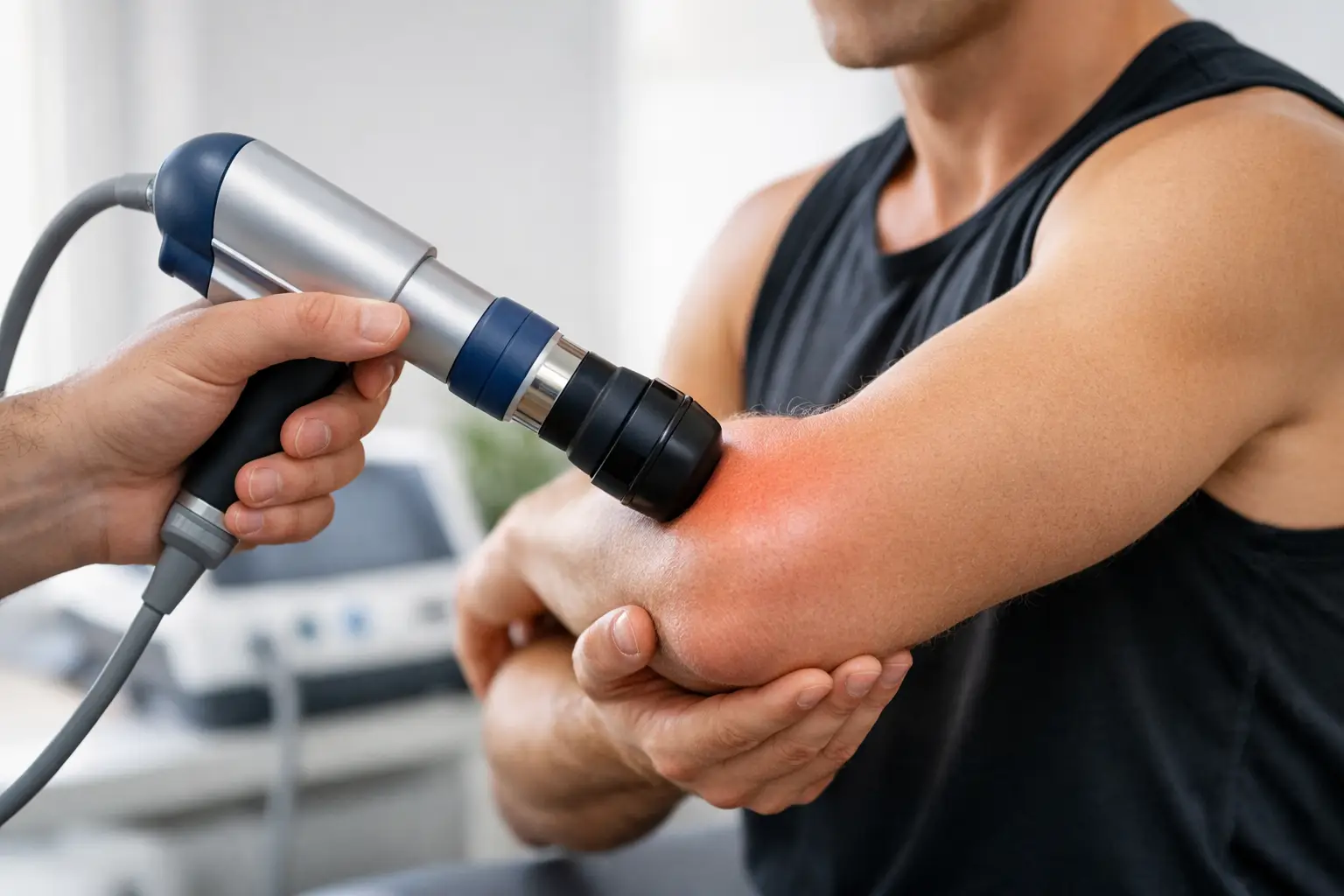
That stubborn tendon pain that warms up during exercise, eases a bit once you get moving, then flares up later? That pattern is common, and it is one reason shockwave therapy for tendon pain gets so much attention. For active adults, runners, lifters, golfers, and busy people who need their body to hold up under real-world demand, the bigger question is not whether a treatment sounds promising. It is whether it actually fits the problem.
The short answer is that shockwave can be useful for certain tendon issues, but it is not a magic fix. If your plan stops at the machine, you are probably leaving results on the table. Tendons usually improve best when treatment is paired with the right loading strategy, movement changes, and a progression that gets you back to training, work, and sport without guessing.
What shockwave therapy for tendon pain actually does
Shockwave therapy uses acoustic waves delivered to irritated or stubborn tissue. In practice, it is often used for chronic tendon problems like Achilles tendinopathy, plantar heel pain, patellar tendon pain, and tennis elbow. The goal is not to numb the area and send you on your way. The goal is to create a response in tissue that has stopped adapting well.
Tendon pain is often less about a dramatic tear and more about failed recovery over time. The tendon gets overloaded, under-recovered, or exposed to repeated stress without enough capacity to handle it. That is why people often say, "I did not injure it in one moment. It just kept getting worse." Shockwave can help stimulate a healing response and reduce pain sensitivity, which may make it easier to tolerate the rehab work that actually rebuilds capacity.
That distinction matters. If pain drops but the tendon is still weak, stiff, or poorly prepared for your sport or training, the problem usually comes back.
When shockwave makes sense
Shockwave is typically more useful for persistent tendon pain than for a brand-new injury. If you have had symptoms for weeks or months, especially if they keep returning when you run, squat, jump, lift, or grip, it may be a reasonable option.
It tends to fit best when the tendon is irritable but not responding well to rest alone, soft tissue work, or random exercise. It can also help when pain is preventing you from loading properly. In that case, reducing symptoms is not the finish line. It is what allows you to start progressing again.
Common cases include Achilles tendon pain in runners, patellar tendon pain in athletes who jump or squat a lot, lateral elbow pain from gripping and lifting, and plantar fascia-related heel pain that overlaps with tendon loading issues. It is not the right tool for every painful tendon, and it is not always the first step. The right choice depends on how long symptoms have been around, how irritable the tissue is, what movements provoke it, and what your training or work demands actually look like.
What it feels like and what to expect
Shockwave is quick, but it is not always comfortable. Most people describe it as intense, localized pressure or tapping over the painful area. The dosage can be adjusted, and a good provider should explain what they are doing and why.
You may feel sore afterward, especially in the first day or two. That does not automatically mean something went wrong. It means the treatment created a stimulus. Some people notice improvement after a few sessions, while others need more time and a better loading plan before things shift.
This is where expectations matter. If you are hoping one session will erase a six-month tendon problem, that is not a realistic standard. Tendons usually change slowly. Good treatment respects that.
Why rehab still matters more than the machine
Here is the part many people miss. Tendons need load. Not reckless load, but the right amount, at the right time, with the right progression. That is why passive treatment on its own often falls short.
A sore Achilles does not just need less pain. It needs the capacity to tolerate walking, running, hills, plyometrics, and whatever else your life demands. A painful patellar tendon does not just need treatment on the front of the knee. It needs stronger quads, better force tolerance, and a smart return to jumping, squatting, and training volume.
Shockwave can be a useful part of that process, but it works best inside a bigger plan. That plan may include isometrics to calm pain, heavy slow resistance to build tendon capacity, mobility work where needed, and movement assessment to spot why the tissue keeps getting overloaded in the first place.
This is one reason Ground Up Chiropractic & Rehab uses a rehab-focused model instead of a passive, symptom-only approach. If the tendon is the site of pain but poor load management, weak surrounding tissues, or movement limitations are driving the problem, that has to be addressed too.
The trade-offs and limitations
Shockwave is not for everyone, and it is not the answer to every type of pain near a tendon. Some people are not good candidates based on medical history, the nature of the injury, or the stage of healing. In very acute cases, other strategies may make more sense first.
There is also a practical trade-off. If someone relies on shockwave but does not change anything about their training load, recovery, footwear, lifting volume, or movement strategy, results can stall. You cannot out-treat a tendon that keeps getting hammered without a plan.
Another limitation is that pain around a tendon is not always tendon pain. Sometimes the issue involves the joint, nerve irritation, referred pain, or a different structure entirely. That is why a detailed assessment matters before deciding that shockwave is the tool.
How a good treatment plan is built
A solid plan starts by answering a few basic but important questions. What tissue is actually involved? What aggravates it? How irritable is it day to day? What does your current training, work, or sport load look like? And what do you need to get back to?
From there, treatment should match the person, not just the body part. A recreational runner with Achilles pain needs a different progression than a powerlifter with patellar tendon pain or a desk worker with elbow symptoms from repetitive gripping and gym training. The treatment may include shockwave, but it should also include a strength progression, realistic modifications to activity, and checkpoints that show whether the tendon is actually becoming more tolerant.
That is the difference between chasing relief and building resilience. Relief feels good in the short term. Resilience is what lets you trust the area again.
How many sessions does it take?
It depends on the tendon, the chronicity of symptoms, and what else is being done alongside it. Many people receive a short series of treatments over a few weeks, but the bigger variable is not just the number of sessions. It is whether the tendon is being loaded appropriately between visits.
If you are getting treatment but still doing too much too soon, progress can be slow. If you are under-loading and avoiding everything because you are afraid of pain, that can also keep the tendon deconditioned. The sweet spot is usually controlled exposure. Enough to build capacity, not so much that the area stays constantly flared.
A better way to think about recovery
If you are considering shockwave therapy for tendon pain, think of it as one tool that may help create momentum, not a standalone fix. The best results usually happen when pain relief is paired with a clear rehab plan, better load management, and progressive strength work that matches your goals.
That matters whether your goal is getting through a workday without limping, returning to long runs, squatting without knee pain, or playing your sport without the same flare-up every few weeks. Tendon recovery is rarely about doing less forever. It is about building back the capacity to do more.
If your tendon pain has been hanging around longer than it should, stop treating it like something that will disappear with rest alone. The right plan should help you understand why it hurts, what needs to improve, and how to get back to moving with confidence instead of constantly testing your luck.
