If your back pain keeps coming back every time you sit too long, lift something awkwardly, train hard, or try to get back into a routine, the problem usually is not just pain itself. Root cause treatment for back pain means looking past the sore spot and asking a better question: why does your back keep getting overloaded in the first place?
That matters because a lot of people have already tried the usual cycle - rest, a few stretches, a massage, maybe an adjustment, maybe some generic core work - only to feel better for a week or two and then flare up again. Temporary relief is not useless. It can help. But if the reason your back is getting irritated never changes, your results usually do not last.
What root cause treatment for back pain actually means
The phrase gets thrown around a lot, but in practice it should mean something specific. It does not mean there is always one single hidden cause. Back pain is rarely that simple. More often, it is a mix of factors that build up over time.
For one person, the issue might be limited hip mobility and poor tolerance to spinal loading when deadlifting. For someone else, it could be long hours at a desk, low movement variability, poor sleep, and a body that has become less confident with bending and lifting. Another person may have good mobility but not enough strength or endurance to handle their job, their sport, or the volume of training they want to do.
A real root cause approach looks at symptoms, yes, but also movement quality, joint stiffness, soft tissue sensitivity, training history, workload, recovery, strength, and the specific things that trigger flare-ups. It connects the pain to the person, not just to a body part.
Why symptom-based back pain care often falls short
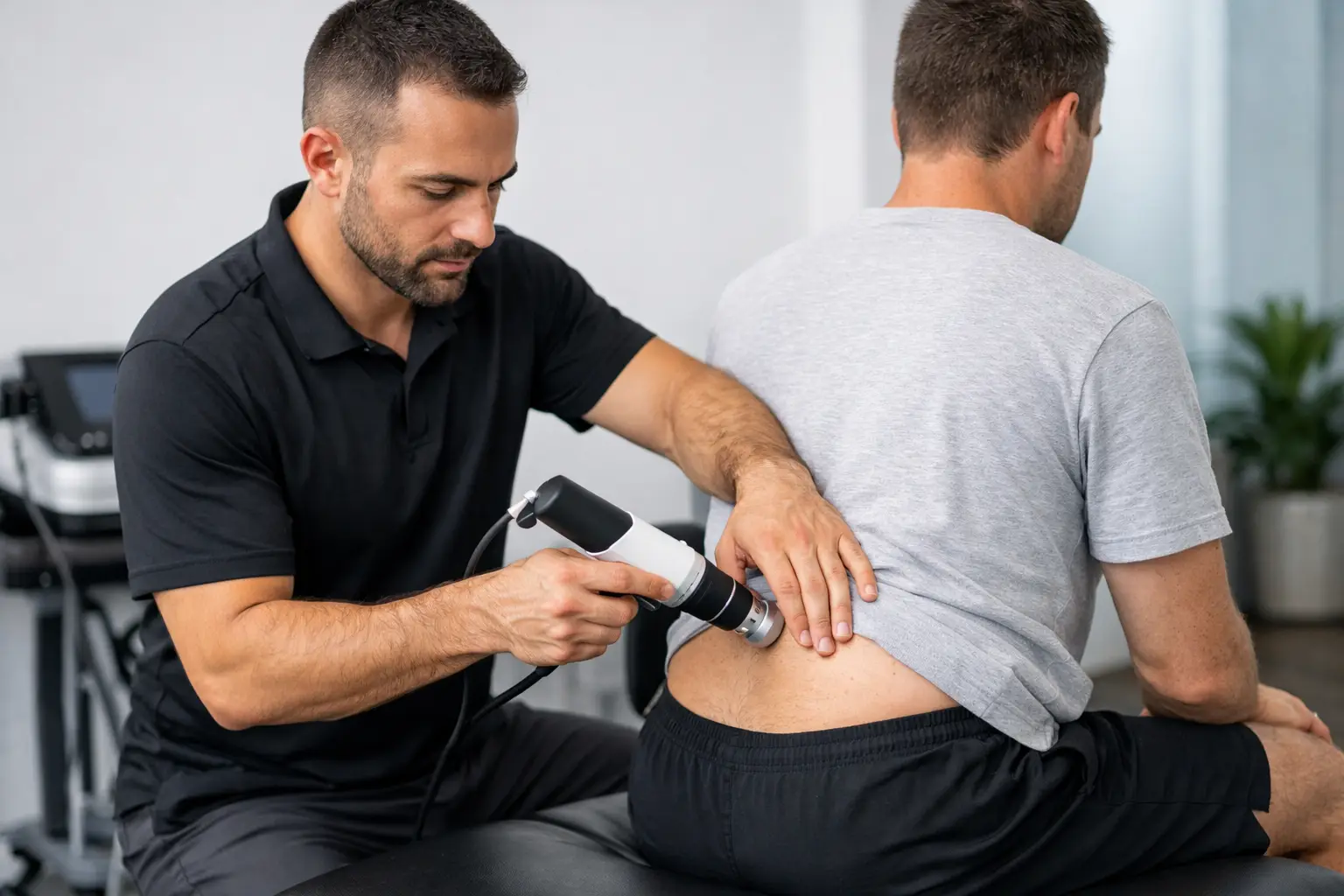
Pain relief matters. When your back is locked up, even putting on socks can feel like work. Hands-on treatment, chiropractic care, soft tissue therapy, massage therapy, joint mobilization, adjustments when appropriate, shockwave therapy, Class IV laser therapy, and cupping can all have a place.
But on their own, these tools do not automatically solve the bigger problem. If your back pain drops from an eight to a three, that is progress. If you still move the same way, avoid the same positions, and have the same strength deficits or workload issues, you may be set up for the same flare-up next month.
This is where many active adults get stuck. They are not looking for endless appointments. They want a plan that helps them understand what is going on, improve how they move, and build enough capacity to get back to training, work, sport, and normal life without feeling fragile.
The root cause of back pain is often about capacity
One of the biggest misses in back pain care is treating pain like a purely structural issue. Sometimes there is a clear injury. Often, though, the bigger question is whether your body currently has the capacity to handle the demands you are placing on it.
Capacity is your ability to tolerate load, movement, volume, repetition, and stress. If your job involves lifting, your back needs to tolerate lifting. If you sit all day and then crush a hard workout at night, your body needs to be ready for that jump in demand. If you are a parent carrying kids, a golfer rotating repeatedly, or a runner logging more mileage than usual, your system needs enough mobility, strength, coordination, and recovery to keep up.
When demand exceeds capacity, pain often shows up. That does not mean you are broken. It usually means something needs to be rebuilt, progressed, or managed better.
What a better assessment looks like
A root cause treatment plan starts with a detailed assessment, not a rushed appointment and a one-size-fits-all routine. That means looking at how your symptoms started, what aggravates them, what eases them, what your training or work demands look like, and what your goals actually are.
Then comes movement. Can you bend, rotate, hinge, squat, lunge, and stabilize well? Are your hips contributing enough? Is your thoracic spine stiff? Are you guarding certain movements because they feel threatening? Are you strong in the ranges you need for your sport or your day-to-day life?
This is also where nuance matters. Not everyone with back pain needs the same exercises. Not everyone needs an adjustment. Not everyone needs to stop lifting. And not every painful movement should be avoided forever. Good assessment helps sort out what needs to calm down, what needs to move better, and what needs to get stronger.
Root cause treatment for back pain should combine relief and rebuilding
The best rehab plans do two jobs at once. First, they help settle pain and improve short-term function. Second, they build the physical capacity that makes long-term progress possible.
That is why a complete plan often includes a combination of hands-on treatment and active rehab. Early on, treatment may focus on reducing irritation, improving range of motion, and helping you move with less discomfort. Depending on the person, that could include chiropractic treatment, soft tissue work, massage therapy, joint mobilization, adjustments, laser, shockwave, or cupping as part of the process.
But the plan should not stop there. Once symptoms begin to settle, rehab needs to progress into mobility work, trunk control, hip strength, movement retraining, and eventually more demanding strength-based loading. If your goal is to return to deadlifts, running, hockey, golf, or long workdays without flare-ups, your rehab should actually prepare you for those things.
That is where exercise-based care changes the game. Generic rehab often stalls because it never progresses far enough. You outgrow clamshells and bird dogs pretty quickly if your real goal is lifting a barbell, carrying heavy equipment, chasing your kids, or getting through a full work week pain-free.
Why active people need more than generic back exercises
A desk worker with recurring stiffness and a powerlifter with pain during hinging may both say, "My back hurts," but they do not need the same plan. Even two runners with similar symptoms may need completely different treatment depending on mobility restrictions, strength deficits, training volume, and recovery habits.
That is why root cause treatment for back pain needs to be individualized. The right program matches your current tolerance and your actual goals. Sometimes that means starting with simple position changes and basic core endurance. Sometimes it means teaching you how to reintroduce flexion, rotation, or loading without fear. Sometimes it means getting you back in the gym with a smarter progression instead of telling you to stop everything.
For many people, the missing piece is confidence. After enough flare-ups, you start bracing against movement before you even do it. A good rehab plan rebuilds trust as much as strength.
What long-term back pain recovery usually requires
Long-term improvement is rarely about finding one magic technique. It is usually about getting the right mix of treatment, load management, education, and progression over time.
That may include calming down an irritated area, improving hip or thoracic mobility, building trunk endurance, strengthening weak links, adjusting training volume, improving lifting mechanics, and gradually exposing you back to the movements you have been avoiding. It may also include looking at sleep, stress, and recovery if those are clearly amplifying symptoms.
Some people improve quickly. Others need a more gradual rebuild, especially if pain has been around for months or years. That does not mean recovery is off the table. It means the plan has to match where you are now, not where you wish you were.
At Ground Up Performance & Rehab in Hamilton, this is why care is built around assessment, hands-on treatment when useful, and progressive rehab in a gym-based setting. The goal is not to keep people dependent on passive care. It is to help them move better, get stronger, and return to the things they care about with more control.
When to get assessed
If your back pain keeps recurring, limits training, affects work, or makes everyday movements feel unpredictable, it is worth getting properly assessed. The same goes for pain that is not improving, or pain that seems to improve temporarily and then returns as soon as life gets busy again.
And if your pain comes with symptoms like significant trauma, unexplained weight loss, fever, major weakness, changes in bowel or bladder function, or numbness that is getting worse, that needs prompt medical evaluation.
Back pain is common, but recurring back pain is usually a signal that something in your system needs more than short-term relief. The most useful question is not, "What can I do to get rid of this today?" It is, "What needs to change so this stops controlling what I can do next week, next month, and next season?"
If that sounds like what you have been dealing with, book an assessment online and get a plan built around how you move, what is aggravating your symptoms, and where you want to get back to.
