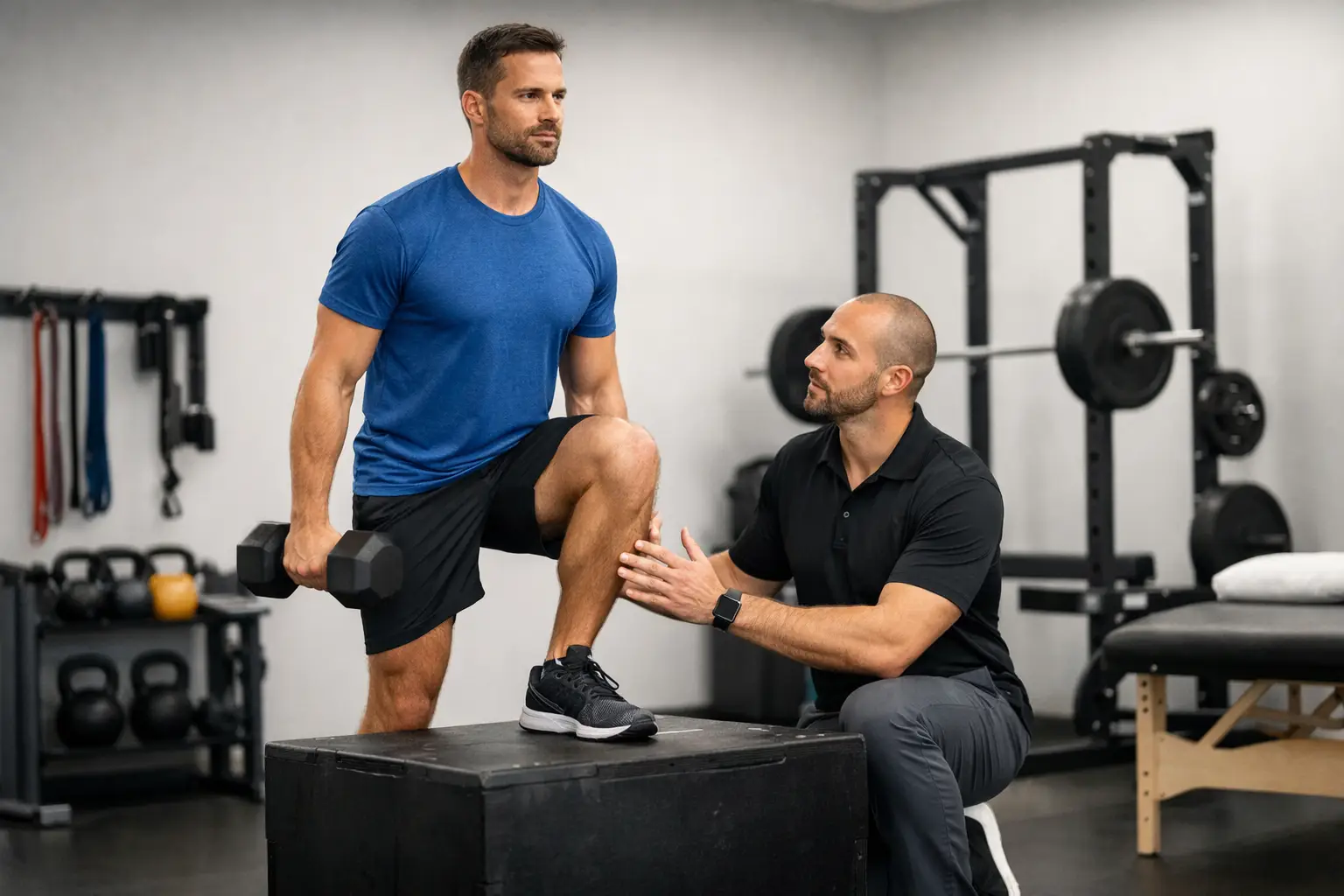
You can be out of pain and still not be ready. That gap is where many active people get stuck after an injury. They return to the gym, pick up the same weight, run their usual route, or get back into a busy work week - then symptoms flare up again. Post injury strength is not about proving you are tough enough to push through. It is about rebuilding the capacity, control, and confidence your body needs for the things you actually do.
For a runner, that may mean tolerating repeated single-leg loading. For a parent, it may mean lifting a child without guarding their back. For a lifter, it may mean returning to a squat, deadlift, press, or pull-up without changing their whole training plan around a painful area. The target is not simply a pain-free day. It is a body that can handle real life and training again.
Why pain relief is only one stage of recovery
Pain is valuable information, but it is not a complete measure of readiness. Symptoms may settle because irritated tissue has calmed down, you have reduced activity, or hands-on treatment has helped you move more comfortably. Those are useful wins. They do not automatically mean your strength, coordination, endurance, or tolerance for load has returned.
This is why a person can feel good walking around but feel unsure under a barbell, during a hard shift at work, or late in a hockey game. The demands have changed. If your rehab only prepared you for the clinic table or a few low-load exercises, the next jump in demand can feel abrupt.
Passive treatments can have a place in recovery. Chiropractic care, soft tissue therapy, joint mobilization and adjustments when appropriate, massage therapy, cupping, shockwave therapy, or Class IV laser therapy may help reduce symptoms and improve movement enough to start loading more effectively. But they work best as part of a bigger plan. The lasting part of recovery is usually built through progressive movement and strength work that matches your goals.
What post injury strength actually means
Post injury strength is not limited to how much weight you can lift. It is your ability to produce force, control movement, absorb force, and repeat those tasks without your symptoms or confidence falling apart.
A shoulder recovering from pain may need pressing strength, pulling strength, overhead control, and the endurance to tolerate a full training session. An ankle may need calf strength, balance, jumping capacity, and change-of-direction control before you trust it on a court or trail. A back may need more than core exercises. It may need gradual exposure to bending, lifting, carrying, rotating, and the specific loads that have become intimidating.
The right plan depends on the injury, your training background, the demands of your work or sport, and what you want to return to. Someone preparing for a half marathon needs a different progression than someone whose goal is to deadlift confidently or make it through long nursing shifts. Generic exercise sheets often miss this context.
Capacity matters more than finding a perfect exercise
People often search for the one movement that will fix a painful knee, shoulder, or back. In reality, recovery is more often about building enough capacity across a range of relevant movements. A squat variation may be useful, but so may a split squat, step-up, hamstring exercise, calf raise, carry, or controlled jump depending on the person and goal.
Exercises are tools. The important questions are whether the movement is appropriate for your current ability, whether the load is challenging enough to create adaptation, and whether the plan progresses as you improve. Staying with the same light band exercise for months may feel safe, but it rarely prepares you for heavy groceries, a weekend tournament, or a return to your normal gym program.
The loading sweet spot: enough challenge, not a flare-up cycle
A common mistake after injury is treating every symptom as a sign to stop. The opposite mistake is forcing a return to full intensity because pain has improved. Neither approach gives you much useful information.
A better approach is graded exposure. Start with a version of the activity your body can tolerate, then increase one or more variables over time: range of motion, resistance, repetitions, speed, volume, complexity, or frequency. The goal is to create a manageable training signal, then assess how you respond during the session and over the next 24 to 48 hours.
Some discomfort can be acceptable in rehab, especially when rebuilding tolerance in an area that has been sensitive. It depends on the presentation, the movement, the severity of symptoms, and how quickly you settle afterwards. Sharp, escalating pain, major swelling, loss of function, new numbness or weakness, or symptoms that are clearly worsening deserve a professional assessment. Rehab should challenge you, not repeatedly bury you.
This is where tracking helps. You do not need to obsess over every sensation. Simply note the load you used, how the movement felt, and whether your symptoms were back to baseline by the next day. Patterns become clearer when you look at more than one workout.
Build strength that transfers to your goal
A strong rehab plan eventually looks more like the life or sport you are returning to. That does not mean copying your sport immediately. It means closing the gap in sensible stages.
If you want to run, early work may include strength for the calves, hips, quads, and trunk, followed by walk-run progressions and gradual increases in distance or pace. If you want to return to lifting, you may begin with modified ranges, tempos, dumbbells, or supported variations before building back to heavier barbell work. If your job involves lifting, carrying, climbing, or working overhead, those patterns need to appear in your plan before you are expected to handle a full shift confidently.
Gym-based rehab is valuable because it makes this progression practical. You can move from controlled exercises to real loading without pretending that a table-based treatment alone will prepare you for a demanding physical task. It also gives you the chance to practise the movements you have avoided, with coaching and a clear rationale for each step.
Confidence is trained too
After an injury, fear of movement is not weakness or a lack of motivation. It is often a reasonable response to a painful or unpredictable experience. But avoiding every movement that once hurt can keep the area feeling unfamiliar and fragile.
Confidence returns when you collect evidence. You complete a set. You tolerate a heavier carry. You run a little farther. You get through a training session without spending the next two days paying for it. Those small wins matter because they change what you believe your body can do.
That is also why rehab should not be built around someone else's timeline. A high-level athlete, recreational gym-goer, desk worker, and new parent may all have similar symptoms but very different definitions of a successful return. Your plan should reflect the activities you care about, not just a checklist of basic exercises.
When a guided assessment makes sense
If you have been resting, getting temporary relief, or repeating the same beginner exercises without making progress, it may be time to look at the whole picture. A detailed assessment can examine symptoms, movement options, strength, training history, work demands, recovery habits, and the activities that continue to cause trouble.
At Ground Up Chiropractic and Rehab in Hamilton, care can combine rehab-focused chiropractic treatment and hands-on tools with progressive strength programming in a dedicated gym environment. The purpose is not to make you dependent on treatment. It is to help you understand what is contributing to the problem, build a plan you can follow, and progress toward the demands that matter to you.
The best return to training is rarely dramatic. It is built rep by rep, session by session, until the movement that once felt risky becomes part of your normal routine again. If your body is ready for more than symptom management, book an assessment and take the next step with a plan built around your goals.
