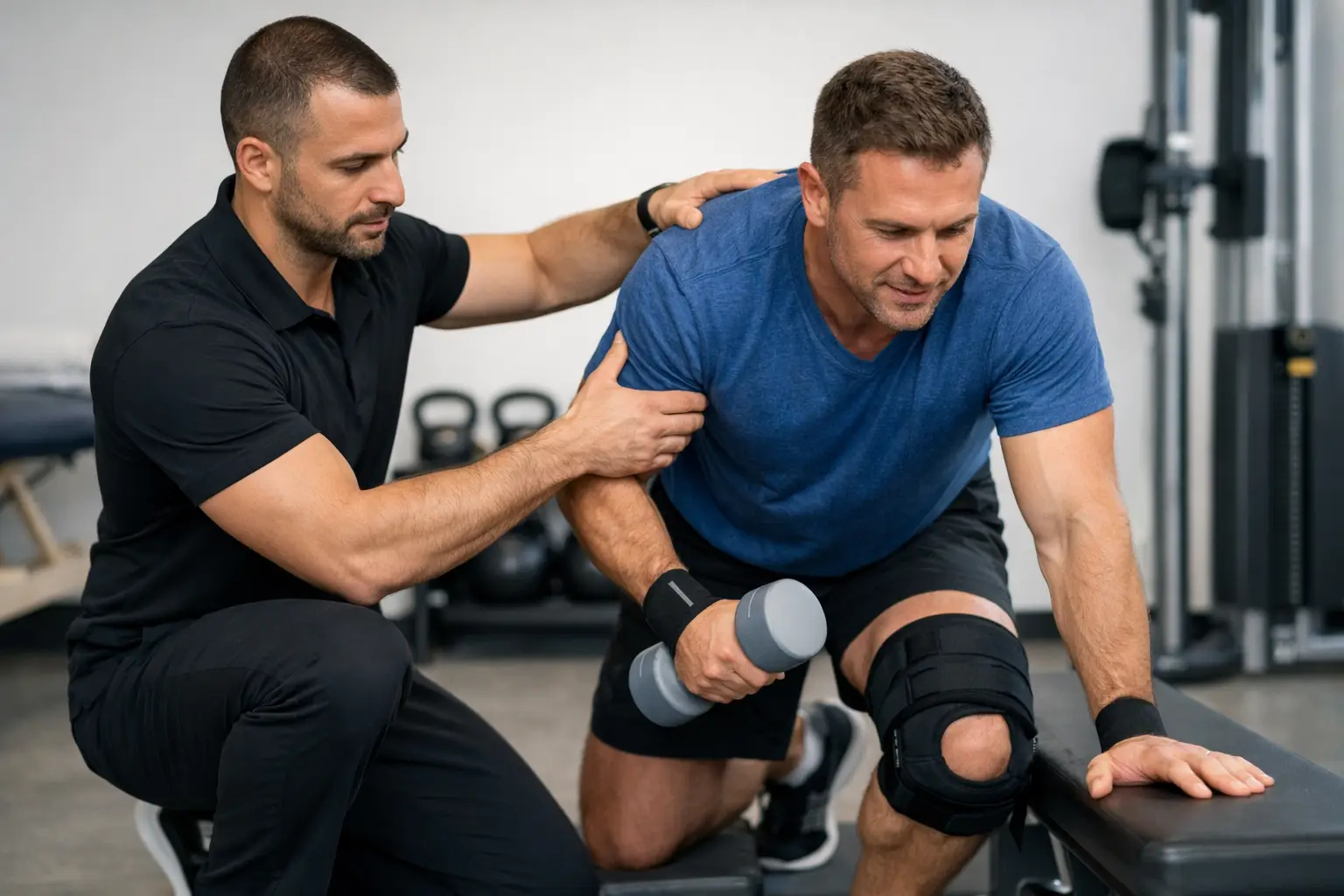
A painful squat, bench press, deadlift, or overhead press does not automatically mean you need to stop training for weeks. Smart lifting injury modifications can often help you stay active, maintain strength, and gradually rebuild confidence without repeatedly pushing into symptoms. The goal is not to prove toughness by training through sharp pain. It is to find a version of training your body can tolerate today, then progress it as capacity improves.
This matters because complete rest can sometimes leave you feeling stiffer, weaker, and more hesitant to return. On the other hand, forcing your usual program when a movement is clearly aggravating can keep an irritated area from settling down. The useful middle ground is a plan that respects symptoms while keeping you moving.
What a Good Modification Actually Does
A modification is not simply replacing every hard exercise with a random band drill. It is a deliberate change to an exercise variable so you can continue training with acceptable symptoms and good movement quality.
That variable may be load, range of motion, tempo, volume, grip, stance, exercise selection, or training frequency. For example, a lifter with knee pain during a deep back squat may tolerate a box squat to a comfortable depth, a split squat with a shorter range, or a leg press with controlled loading. Someone whose shoulder hurts during barbell benching may do better temporarily with dumbbells, a neutral grip, floor pressing, or push-ups on an elevated surface.
The best option depends on the person, the irritated tissue, the demands of their sport or job, their training history, and what their symptoms do during and after exercise. A modification should give you a meaningful training effect while reducing unnecessary aggravation. It should not become a permanent way of avoiding a movement you want or need to return to.
Start With Your Symptom Response
Pain is useful information, but it is not always a stop sign. Mild discomfort that stays manageable, does not worsen set to set, and settles back to your usual baseline within 24 hours may be acceptable during rehab. Sharp pain, catching, giving way, rapidly increasing symptoms, major swelling, numbness, unexplained weakness, or pain that continues to escalate deserves a more cautious approach and an assessment from a qualified health professional.
Instead of judging one rep in isolation, look at the full response. Did pain increase as you added sets? Did your technique fall apart because you were guarding? Were you more sore or limited the next morning? These answers tell you more than whether you managed to finish a workout.
A simple rule is to make one meaningful change at a time. If you reduce load, shorten range, switch exercises, and cut volume all at once, it becomes hard to know what actually helped. Start with the smallest adjustment likely to make the movement tolerable.
The Main Lifting Injury Modifications to Use
Reduce load before abandoning the lift
Load is often the easiest variable to change. Dropping from a heavy working weight to a lighter, controlled effort can reduce symptoms while preserving the pattern. This does not mean every session needs to feel easy. It means the current load must match your current capacity.
For a flare-up, using an effort level where you feel like you have several repetitions left in reserve can be a practical starting point. You can then build load back gradually as the movement becomes more comfortable and predictable.
Adjust the range of motion
A painful point in a lift is frequently range-specific. A deep squat may hurt while a higher box squat is comfortable. The bottom of a deadlift may aggravate your back, while blocks or rack pulls allow you to load the hinge pattern without the same response. A shoulder may dislike the bottom of a dip but tolerate a partial-range push-up.
This is not cheating the movement. It is using a tolerable range to keep building strength, then restoring range in stages. The key is not to avoid depth forever. It is to earn it back through progressive exposure.
Slow the tempo and improve control
Fast reps, bouncing out of the bottom, and rushed transitions can expose a weak link in a movement. Slowing the lowering phase or adding a brief pause can reduce momentum and show you where control changes.
Tempo work may lower the load you can use, but that is often the point. A lighter squat with a three-second descent can still challenge the legs while giving you more control over knee, hip, and trunk position. It also gives your rehab provider useful information about what your body tolerates.
Change the setup, not just the exercise
Small setup changes can create a big difference. A wider stance, heel elevation, different bar position, neutral grip, adjusted bench angle, lifting straps, or a different handle may change stress enough to make an exercise workable.
For example, a lifter with wrist discomfort in a front rack position may temporarily use straps around the bar, switch to a safety bar, or use a goblet squat. A conventional deadlift that aggravates a hip may be better tolerated as a trap-bar deadlift or a sumo variation. There is no universal best variation. The right choice is the one that matches your current symptoms and your return-to-training goal.
Keep training around the problem
An irritated shoulder does not mean your legs, trunk, walking tolerance, and conditioning must disappear. A knee flare-up does not mean every upper-body session has to stop. Training the areas and patterns that are comfortable can help maintain your routine and prevent the all-or-nothing mindset that derails progress.
That said, training around an injury should not ignore the injured area completely. At some point, it needs gradually dosed work. The answer is usually not endless avoidance. It is an appropriate starting dose and a clear progression.
Avoid the Two Common Extremes
The first extreme is pushing through anything because you are used to hard training. This can turn a manageable flare-up into a longer interruption, especially when pain is changing your technique or accumulating after every session.
The other extreme is removing every exercise that creates any sensation. That can make normal movement feel threatening and leave you less prepared to return to the gym. Most successful rehab sits between these extremes: reduce what is clearly provocative, keep what is tolerable, and progressively rebuild the movements that matter.
If your symptoms are recurring, the issue may not be one “bad” exercise. Sometimes it is a sudden jump in volume, poor recovery, a new job demand, reduced sleep, previous injury history, or a gap between what your program demands and what you have prepared for. A detailed assessment should look beyond the painful rep.
Build a Return Plan, Not a Temporary Workaround
A useful return plan has an end point. If you are modifying your squat, define what needs to improve before you lower the box, add depth, or increase load. If you have switched from barbell pressing to landmine pressing, decide how you will reintroduce the barbell rather than treating the substitute as the final destination.
Progress can be as simple as adding a few repetitions, a small amount of load, a little more range, or one additional set. Do not rush to progress every variable at once. When symptoms are less reactive, movement quality is consistent, and your next-day response is stable, you have a better case for moving forward.
At Ground Up Chiropractic and Rehab in Hamilton, that process starts with understanding more than the sore area. A rehab-focused assessment considers your symptoms, lifting technique, mobility, strength, training schedule, work demands, and the goals you are trying to get back to. Hands-on treatment, chiropractic care, soft tissue therapy, shockwave, Class IV laser therapy, or cupping may be useful tools when appropriate, but they work best alongside progressive strength-based rehab and a clear gym return plan.
The best lifting modification is not the one that lets you avoid discomfort forever. It is the one that keeps you connected to training while giving you a realistic path back to the lifts, loads, and confidence you care about. If you are stuck guessing which changes make sense, book an assessment and get a plan built around how you actually move and train.
