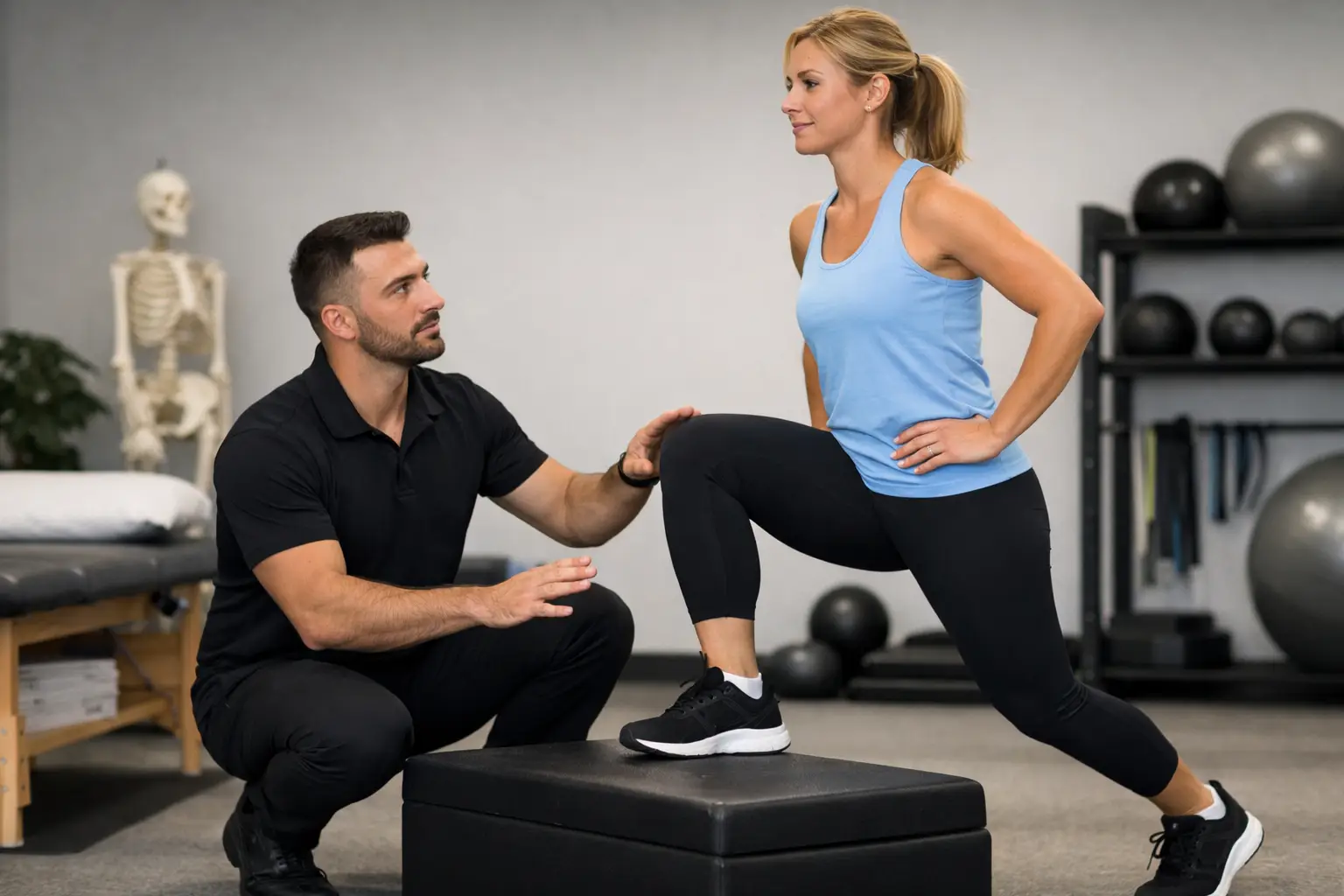
The hardest part of returning to training is often not the pain itself. It is the hesitation before a squat, the urge to skip your run, or the feeling that one wrong rep will put you back at square one. Learning how to rebuild training confidence means addressing more than symptoms. You need a plan that gives your body repeated evidence that it can move, load, and adapt again.
Confidence is not something you wait to feel before getting back to the gym. It is built through the right actions, at the right dose, over time.
Why Training Confidence Drops After Pain
Pain changes how you move and how you think about movement. Maybe your back tightened up during deadlifts, your knee flared after a run, or your shoulder hurt during pressing. Even once symptoms settle, your brain may still associate that movement with danger.
That response is understandable. If you have had a few flare-ups, been told to rest repeatedly, or tried generic exercises that did not match your sport or training, it can feel safer to avoid the movement altogether. The problem is that avoidance can gradually reduce your strength, tolerance, and trust in your body.
This does not mean you should push through every symptom. It means pain and confidence need context. A mild, predictable response that settles can be very different from severe pain, a major loss of function, new numbness or weakness, or symptoms that are worsening quickly. When you are unsure, an assessment with a qualified rehab professional can help you determine the appropriate next step.
Start With a Clear Baseline, Not a Random Restart
A common mistake is returning at the exact point where things went wrong. If heavy barbell squats irritated your knee, jumping straight back to your previous working weight is not a confidence strategy. It is a test with no preparation.
Start by identifying what you can do now. That might be a bodyweight squat to a box, a split squat with support, a lighter goblet squat, or a controlled leg press. For a runner, it may be a walk-run interval rather than an attempt to match your old weekly mileage. For an overhead athlete, it may mean rebuilding pressing tolerance with a more comfortable angle and lighter load.
The goal is not to find the one perfect exercise. The goal is to find an entry point that is challenging enough to create progress but manageable enough that you can repeat it without fear. A detailed movement assessment can identify where symptoms show up, what movements you already tolerate, and what variables need to change first: range of motion, load, volume, speed, grip, stance, or exercise selection.
Use Symptoms as Feedback, Not a Stop Sign
Pain is information, but it is not always a precise damage report. During a return to training, some discomfort may be acceptable depending on the injury, the movement, and how your symptoms behave over the next 24 hours. What matters is the pattern.
If discomfort is mild, stays stable, and settles after training, your current dose may be reasonable. If symptoms spike sharply, change your movement dramatically, linger longer than expected, or progressively worsen session to session, your training variables likely need adjustment.
This is where many people get stuck. They either avoid all discomfort or ignore it completely. Neither approach builds confidence well. The better approach is to observe, adjust, and progress with intent.
Rebuild Training Confidence With Small Wins
Confidence grows when your expectations match the task in front of you. Instead of making your first week back about proving you are recovered, make it about stacking successful exposures.
For example, someone returning to deadlifts after low back pain may begin with a hip hinge pattern, then a kettlebell deadlift from blocks, then a barbell from an elevated position, before progressing range and load. Each step teaches the body and brain that the movement is tolerable again.
The same principle applies to running. A runner who has lost confidence in their Achilles does not need to decide whether they are ready for a 10-kilometre run. They need a manageable first exposure, such as walk-run intervals, followed by a review of how the tendon responds. That turns a vague fear into a measurable training decision.
Keep a simple record of your sessions: the exercise, load, sets, reps, symptoms during training, and how you felt the next day. This is not about obsessing over every ache. It is about creating proof of progress when your memory is focused on the bad flare-up from three months ago.
Progress One Variable at a Time
Training tolerance is affected by more than weight on the bar. Volume, range of motion, speed, exercise variation, frequency, sleep, stress, and total activity all matter. When several variables jump at once, it is hard to know what your body was not ready for.
A smarter return is usually more boring on paper, but more effective in real life. Add a few reps before adding significant load. Build tolerance in a reduced range before chasing full depth. Reintroduce running distance before adding hill sprints. Restore pressing volume before testing a one-rep max.
There are exceptions. An athlete with a firm competition date may need a more aggressive progression, while someone with a long history of recurring flare-ups may benefit from a slower build. The right pace depends on your symptoms, training history, goals, and how much capacity you have outside the gym.
Do Not Make Every Session a Test
A max lift, a hard interval workout, or a full game can be useful eventually. Early in rehab, however, these are often poor measures of readiness. They create a pass-or-fail mindset: if it feels perfect, you are good; if it does not, you have failed.
Replace tests with training exposures. Rather than asking, “Can I deadlift 315 pounds today?” ask, “Can I complete three controlled sets at a load that challenges me without creating a major symptom response?” That question is more useful because it gives you somewhere to go next.
Strength Is Part of the Confidence Plan
Mobility work, hands-on treatment, massage, and symptom-relief strategies can help you move more comfortably. But feeling better is only one piece of returning to training. You also need the strength and capacity to handle the activity you want to get back to.
That is why a rehab plan should eventually look more like training. If you want to return to lifting, your rehab should prepare you to lift. If you want to run, it should build the calf, hip, and lower-body capacity required for running. If you want to golf, play hockey, or keep up with your kids, the exercises should reflect those demands.
At Ground Up Chiropractic and Rehab, hands-on chiropractic care, joint mobilization or adjustments when appropriate, soft tissue therapy, cupping, shockwave therapy, and Class IV laser therapy may be used to help manage symptoms and improve movement options. They are not the whole plan. The bigger goal is progressive, gym-based rehabilitation that helps you build tolerance for the things that matter to you.
Stop Waiting for Perfect
Many active people delay their return because they are waiting to feel 100 percent certain. That certainty rarely arrives before you start moving again. More often, it develops after several weeks of well-managed training.
You may still notice stiffness before a session. You may have days where symptoms are louder because sleep was poor, work was stressful, or you did more than usual. A resilient return does not mean every workout feels perfect. It means you know how to respond when your body gives you feedback, without panicking or abandoning your plan.
That also means adjusting your expectations. Your first sessions back may feel awkward. Your working weights may be lower. Your conditioning may take time to return. None of that means you are broken or that training caused permanent harm. It means you are rebuilding a quality that was temporarily reduced.
When You Need More Than a Generic Exercise Plan
If you keep getting stuck at the same point, a generic list of stretches and band exercises may not be enough. Recurring pain often needs a closer look at your movement, training volume, technique, recovery, past injury history, and the specific demands of your job or sport.
A rehab-focused assessment can help connect the dots. The right plan may include targeted hands-on care early on, but it should also give you clear exercises, realistic benchmarks, and a progression back to your actual training environment. For many people, that is the missing piece between temporary relief and a return that feels dependable.
You do not need to earn the right to train by being pain-free forever. You need a starting point, a sensible progression, and enough successful reps to trust your body again. Start smaller than your ego wants, build more consistently than your fear expects, and let confidence follow the work.
