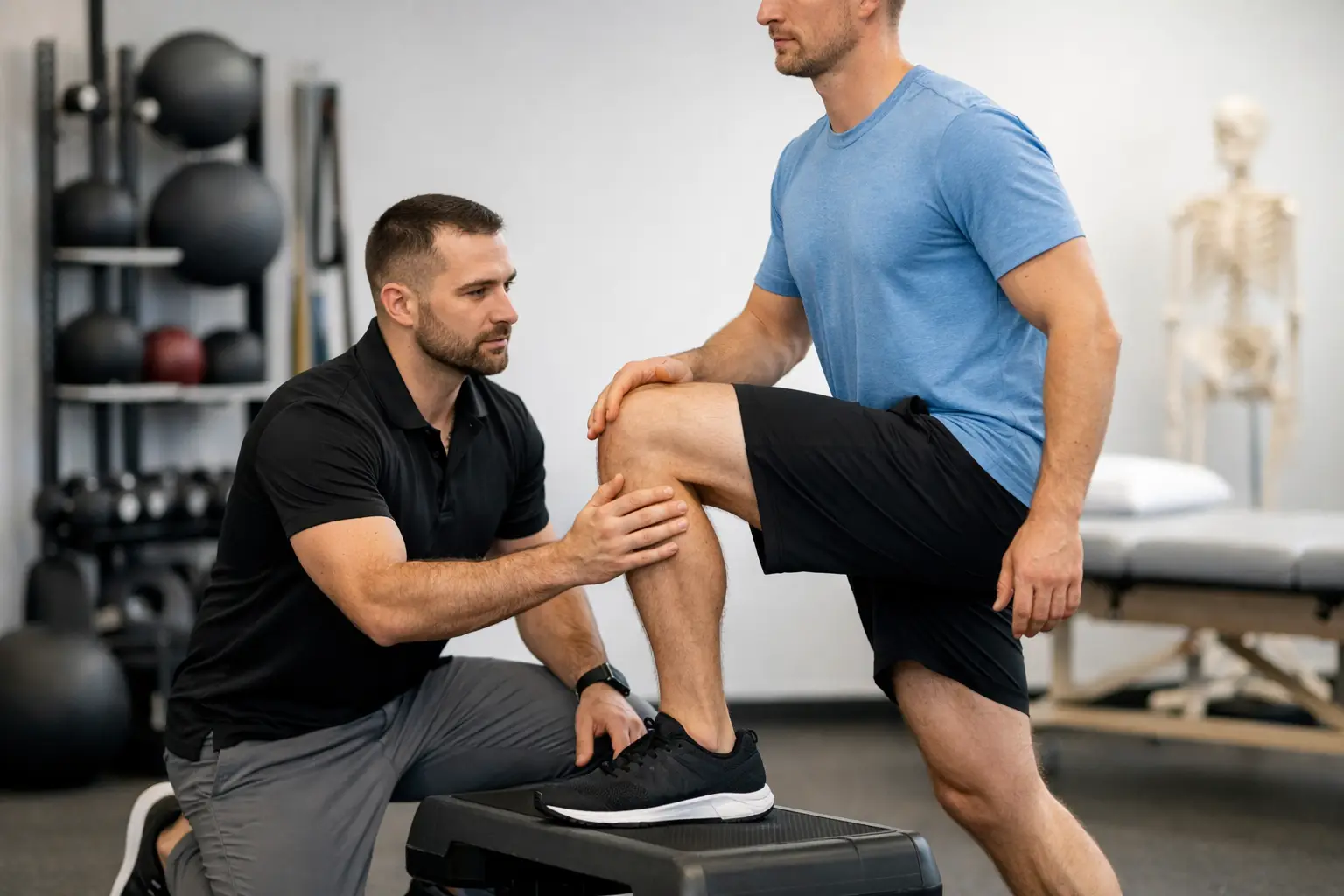
A lot of injuries stop improving when the plan is too vague. You rest for a bit, maybe get a few treatments, try some stretches you found online, and then test the area again. It feels okay until it does not. That is where exercise programming for injury recovery matters most - not as a random list of rehab drills, but as a structured way to rebuild strength, tolerance, and confidence.
For active adults, athletes, and anyone who wants to get back to lifting, running, working, or simply moving without second-guessing every step, the goal is rarely just pain relief. The real goal is capacity. Can your body handle what you are asking it to do? If not, symptoms often keep circling back.
What exercise programming for injury recovery actually means
Good rehab programming is not just about choosing exercises that target the sore area. It is about matching the right exercise, at the right time, at the right dosage, to the person in front of you.
That sounds simple, but it is where a lot of people get stuck. Two people can both have shoulder pain and need very different plans. One might need to calm down a highly irritated tissue and restore basic range of motion. The other might have decent mobility but poor strength and control under load. Give both people the same handout and one of them is probably going nowhere.
Proper programming looks at symptoms, yes, but also movement quality, training history, job demands, sleep, stress, previous injuries, and what the person is trying to get back to. A desk worker with recurring neck pain needs a different progression than a CrossFit athlete working back toward overhead lifting. A runner with Achilles pain needs a different timeline than someone recovering from a low back flare-up after deadlifts.
That is why rehab should not end at treatment tables. Hands-on care, chiropractic treatment, soft tissue work, joint mobilization, massage therapy, shockwave therapy, Class IV laser therapy, or cupping can all be useful tools when they fit the situation. But if the plan does not include progressive loading and movement exposure, the gap between feeling better and functioning better often stays wide.
Why generic rehab often falls short
Most people do not fail rehab because they are lazy. They fail because the plan was never specific enough.
Sometimes the exercises are too easy for too long, so nothing really changes. Other times they are too aggressive too early, which leads to flare-ups and the feeling that exercise makes everything worse. In many cases, the program never progresses beyond band work, light mobility drills, or isolated movements, even though the person wants to return to squatting, running, golfing, or working a physical job.
There is also the problem of chasing symptoms without addressing demand. If your knee hurts during stairs, lunges, or running, the answer is not always complete rest. It may be that the knee currently does not tolerate enough load, speed, or volume. The right rehab plan builds that tolerance gradually. That is very different from waiting for pain to disappear before doing anything meaningful.
This is where a detailed assessment changes the conversation. Instead of asking only, Where does it hurt, you ask better questions. What movements trigger it? What loads are tolerated? What patterns are compensating? What does this person need to return to? That is how rehab becomes a plan instead of a guess.
The phases of a good injury recovery program
In real life, recovery is not perfectly linear, but most strong rehab plans move through a few clear stages.
Settle symptoms without shutting everything down
Early on, the goal is usually to reduce irritation and find movements the body can tolerate. That might mean modifying training, reducing range, adjusting tempo, or temporarily changing exercise selection. It does not always mean stopping completely.
For example, someone with shoulder pain during pressing may still tolerate rowing, carries, controlled isometrics, and lower body training. Someone with low back pain might need to pull back from heavy barbell work but still benefit from walking, core control work, hip strengthening, and carefully selected hinge variations.
The point is to keep useful movement in the plan where possible. Complete rest can be necessary in some cases, but for many common musculoskeletal issues, smart movement tends to help more than prolonged shutdown.
Restore mobility, control, and basic strength
Once symptoms are more manageable, the program usually shifts toward improving the things that are limiting clean movement. That may include range of motion, positional control, trunk stiffness, joint coordination, or local tissue strength.
This stage is often where people feel better and assume they are done. They are not. Feeling better during everyday movement is not the same as being ready for hard training, field sport, long runs, or physically demanding work.
Build capacity for real life and training
This is the stage many people skip, and it is often why pain returns.
Your tissues and nervous system need exposure to load. They need to relearn force, repetition, speed, and endurance. If your rehab never progresses beyond rehab-style exercises, there is a good chance your body will struggle when real demand comes back.
That is why progressive strength work matters. Depending on the injury, this could mean reintroducing split squats, step-downs, loaded carries, presses, deadlift variations, plyometric progressions, tempo work, or gym-based movement patterns that bridge the gap between rehab and performance.
This phase should still be individualized. Some people need more time building basic strength. Others need more dynamic work, sport-specific movement, or return-to-running progressions. It depends on the person, the injury, and the goal.
What makes a rehab program effective
A strong program is specific, measurable, and adjustable.
Specific means the exercises match both the problem and the goal. If your issue shows up under rotation, impact, overhead loading, or prolonged sitting, the plan should reflect that. Measurable means there is a way to track whether things are improving, whether that is pain response, range of motion, strength, tolerance to volume, or confidence with a movement. Adjustable means the program changes as your body changes.
That matters because flare-ups can happen even in good rehab. A pain increase does not always mean damage or failure. Sometimes it means the dose was a little too high, recovery capacity was lower that week, or progression happened too fast. The answer is often to modify, not abandon the process.
This is where one-on-one rehab support makes a big difference. At Ground Up Performance & Rehab in Hamilton, exercise-based care is built around assessment, hands-on treatment when appropriate, and gym-based progression so patients are not stuck choosing between passive treatment and being told to just tough it out. The goal is to create a clear path from pain to performance.
Exercise programming for injury recovery is not one-size-fits-all
The best rehab plan for a runner is not automatically the best plan for a powerlifter. The best plan for a parent with hip pain is not automatically the best plan for a tactical worker dealing with recurring low back flare-ups.
Even when the body part is the same, the dosage changes. Frequency, intensity, range, tempo, and exercise selection all matter. Some injuries respond well to isometrics early on. Others need controlled eccentric loading. Some people need more mobility work because stiffness is limiting movement options. Others already move well enough and simply need to get stronger.
That is also why treatment alone is rarely enough. Hands-on care can help reduce pain, improve comfort, and create an opportunity to move better. Chiropractic care, physiotherapy, and massage therapy can all play a role. But the longer-term change usually comes from what the body can do, not just what is done to it.
When to get assessed instead of guessing
If pain keeps returning every time you resume training, if you feel stuck doing the same light rehab work for weeks, or if you are no longer sure what is helping versus aggravating things, it is probably time for a proper assessment.
That does not mean your injury is severe. It usually means you need a clearer plan. A qualified rehab professional can look at movement patterns, training demands, strength deficits, mobility restrictions, and symptom behaviour to figure out what stage you are actually in and what your next step should be.
That kind of clarity is especially valuable if you have already tried rest, passive care, or generic exercises without getting back to the level you want.
The right program should make rehab feel purposeful. Not random. Not endless. Not limited to avoiding pain forever.
Recovery is not about proving how much discomfort you can tolerate, and it is not about waiting for a perfect pain-free day to start moving again. It is about building back the capacity your life requires, one smart progression at a time. If that sounds like what you are dealing with, book an assessment online and get a plan that meets you where you are now and moves you toward where you want to be.
