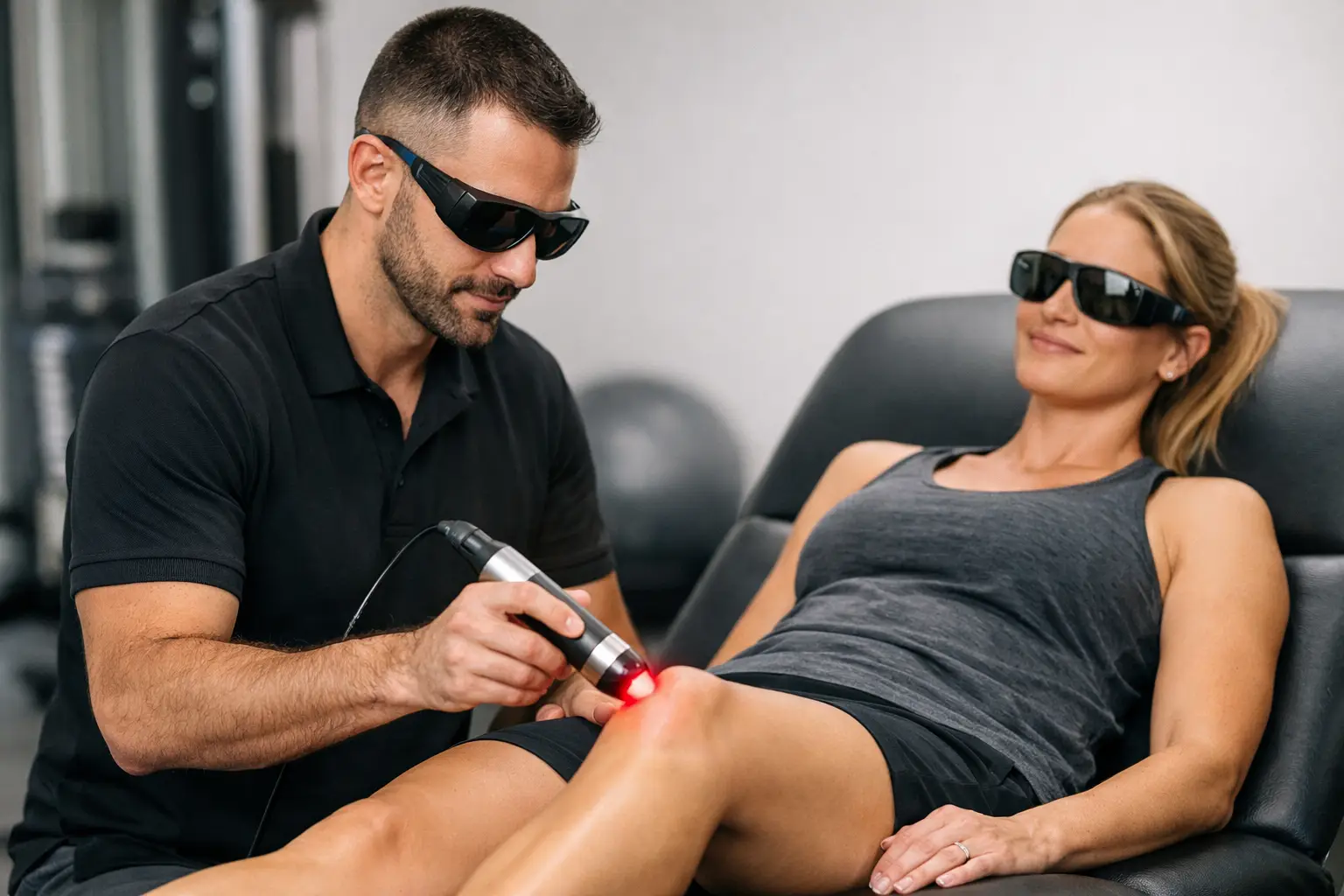
Some people expect Class IV laser therapy to feel dramatic right away. Then they leave a session wondering if they should be sore, rested, looser, or back to normal by tomorrow. The truth is that class iv laser therapy recovery usually feels less dramatic than people expect, but that does not mean nothing is happening. It means recovery depends on the tissue involved, the reason you are being treated, and what the rest of your rehab plan looks like.
What class iv laser therapy recovery actually means
Class IV laser therapy is often used to help manage pain, calm irritated tissue, and support the healing environment in muscles, tendons, ligaments, and joints. It is not magic, and it is not a replacement for a proper assessment. It is a tool.
That distinction matters. If your shoulder pain is tied to poor overhead mechanics, limited thoracic mobility, rotator cuff weakness, and training volume that climbed too quickly, laser therapy might help reduce irritation. But your recovery still depends on fixing the movement problem, rebuilding strength, and progressing back into loading the right way.
For some people, recovery after a session feels like reduced pain and easier movement within hours. Others notice a change the next day. Some feel very little after the first visit and more improvement after a few treatments. That is normal. A good rehab plan does not judge success by one session alone.
What you might feel after treatment
Most people tolerate Class IV laser therapy very well. The treatment itself is typically comfortable, and many patients describe it as a warming sensation over the area being treated. Afterward, you might notice less stiffness, less pain with movement, or a small increase in range of motion.
You may also feel nothing dramatic at all. That is one of the reasons people sometimes underestimate it. Unlike a treatment that leaves you clearly sore or obviously stretched, laser therapy often works in a quieter way.
In some cases, there can be mild temporary soreness after treatment, especially if the tissue is already quite irritated. That does not automatically mean something is wrong. It can simply mean the area was sensitive to begin with. Recovery is usually straightforward, but your provider should still explain what response is expected based on your condition.
How long does class iv laser therapy recovery take?
This depends on what you mean by recovery. Recovery from the session itself is often minimal. Many people go right back to work, daily tasks, or training modifications the same day. Recovery from the injury or pain issue is a different conversation.
If you are dealing with a fresh calf strain, an irritated Achilles tendon, low back pain flare-up, tennis elbow, or shoulder irritation, the laser session may be one small part of a much bigger recovery process. The tissue response after treatment may happen quickly, but full recovery still depends on load management, exercise progression, sleep, training habits, work demands, and how long the issue has been present.
Acute problems often respond faster than chronic ones. A recent muscle strain may settle quicker than a tendon that has been irritated for six months. A desk worker with neck pain and stiffness may feel better fast, but if the same postural stress, low activity levels, and poor strength capacity stay unchanged, symptoms often come back.
That is where context matters more than hype.
Why the treatment works better when it is not used alone
This is the part many people miss. Passive care can be helpful, but passive care alone is often incomplete.
If a treatment reduces pain but does not improve how you move, how you load tissue, or how confident you are returning to activity, your results may stall. That is why Class IV laser therapy tends to work best inside a full rehab plan that includes assessment, hands-on care when needed, and progressive exercise.
At a rehab-focused clinic, laser therapy might be paired with chiropractic care, soft tissue treatment, joint mobilization or adjustments when appropriate, mobility work, and strength-based rehab. For an active adult, that usually makes more sense than chasing short-term relief from one treatment at a time.
If your knee hurts when you squat, your goal is not just to make the knee quieter for 24 hours. The real goal is to understand why the knee is getting irritated, improve the movement and strength factors involved, and help you return to training with more capacity.
What affects your recovery after laser therapy?
Several factors shape how class iv laser therapy recovery feels and how much benefit you notice.
The first is the type of tissue involved. Muscle injuries, tendon pain, joint irritation, and nerve-related symptoms can all behave differently. The second is irritability. If your pain flares easily with simple movement, your provider may need to dose treatment and exercise more carefully.
The third is chronicity. Newer issues often calm down faster than long-standing ones, but not always. Some chronic problems improve quickly once the right combination of symptom relief and progressive loading is introduced.
Your daily habits matter too. Sleep, stress, work posture, training volume, and recovery between workouts can all influence how your body responds. So can your expectations. If you are expecting one session to fix months of pain, you will probably feel disappointed even if the treatment is helping.
When you can return to activity
In many cases, you do not need to stop moving after laser therapy. In fact, complete rest is often not the answer unless the tissue is highly aggravated or your provider tells you otherwise. The better question is usually not, "Should I stop?" It is, "What level of activity is appropriate right now?"
That might mean keeping your run shorter, modifying deadlift load, reducing jump volume, changing your desk setup, or adjusting how often you play golf for a couple of weeks. Good rehab keeps you active where possible while respecting what the tissue can currently handle.
This is especially important for active adults and athletes. Recovery is not just about calming pain. It is about rebuilding tolerance. If treatment helps you move with less pain, that creates an opening to train smarter and progress.
What a better recovery plan looks like
The strongest approach is one that does not rely on a single modality. If you are serious about getting back to lifting, running, work, or sport, your care plan should reflect that.
A solid plan usually starts with figuring out what movements are limited, what loads are aggravating you, what tissue is involved, and what your goals actually are. From there, treatment can be used to reduce pain and improve movement quality, but rehab should keep pushing toward strength, control, and confidence.
For example, someone with stubborn shoulder pain may benefit from Class IV laser therapy to reduce irritability, hands-on treatment to improve mobility, and targeted rehab to restore overhead control and pressing tolerance. Someone with Achilles pain may use laser therapy as one piece of a plan that also includes calf strength progressions, tendon loading, mobility work, and running adjustments.
That is a very different mindset from getting treated, resting, feeling a bit better, then flaring up again the moment life or training gets busy.
Class iv laser therapy recovery at a rehab clinic
At Ground Up Chiropractic and Rehab in Hamilton, Class IV laser therapy is used the way it should be used - as one tool within a bigger plan. That means your treatment is not based on a generic protocol or a quick symptom-only approach. It is based on assessment, movement, goals, and what your body actually needs to get back to doing.
That could include chiropractic care, physiotherapy, massage therapy, soft tissue work, cupping, shockwave therapy, mobility work, and gym-based strength progressions depending on the problem. The point is not to throw every treatment at you. The point is to choose the right combination and build a plan that moves you forward.
When to get assessed
If you have pain that keeps coming back, stiffness that limits training, or an injury that is not improving the way you expected, it is worth getting assessed instead of guessing. This is especially true if you have already tried rest, stretching, massage, adjustments, or random exercises and still do not feel confident loading the area.
Class IV laser therapy may be helpful, but the real value comes from knowing when to use it, when not to use it, and what has to happen alongside it. That is how recovery becomes more than temporary relief.
The goal is not to chase treatment after treatment. The goal is to help your body tolerate more, move better, and get back to the things you actually care about with more confidence.
